Seasoned Boxwood from Our Woodland

Stephen and I are lucky enough to be custodians of a couple of acres of ancient woodland here in Suffolk. We have a huge diversity of native species of both flora and fauna, forming a nature corridor between us and neighbouring habitat. Every type of native tree is here and many are centuries old. We are delighted that our woodland has been designated a Private Nature Reserve, which we are very passionate about, as we do our best to fend off the ravages of intensive farming around us. We take much solace from the peace and tranquility it provides and see ourselves as just a tiny part of it’s richly textured history. Positioned a short distance from us is evidence of deliberate fire-making by early Neanderthals dating back roughly 400,000 years, evidence of Roman dwellings, scheduled ancient monument sites, a medieval battle field and an almost complete tudor village.
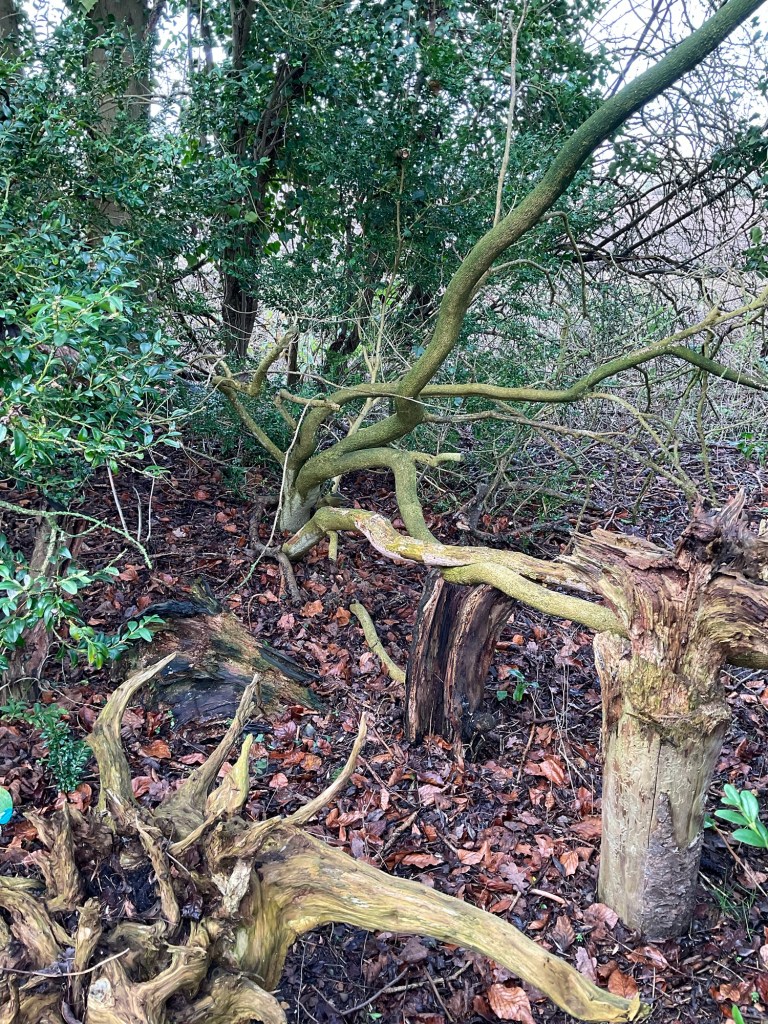
Further to this, our property once doffed it’s cap to a large estate and this piece of woodland was called ‘Nursery Wood’ particularly for the cultivation of boxwood, so that hedges and topiaries could be replaced and repaired. Thankfully that relationship is no more and we very much see ourselves as curators in the preservation and protection of what we have here. It has also become hugely relevant to our art practice, as we have a good quality supply of fallen timber.

The boxwood we have is extraordinary. Largely planted around mature trees and years and years old, the trees provide marvellously concealed nesting for birds and insects. In managing these precious specimens however, the odd branch dies back and we feel able to take it for our own needs!

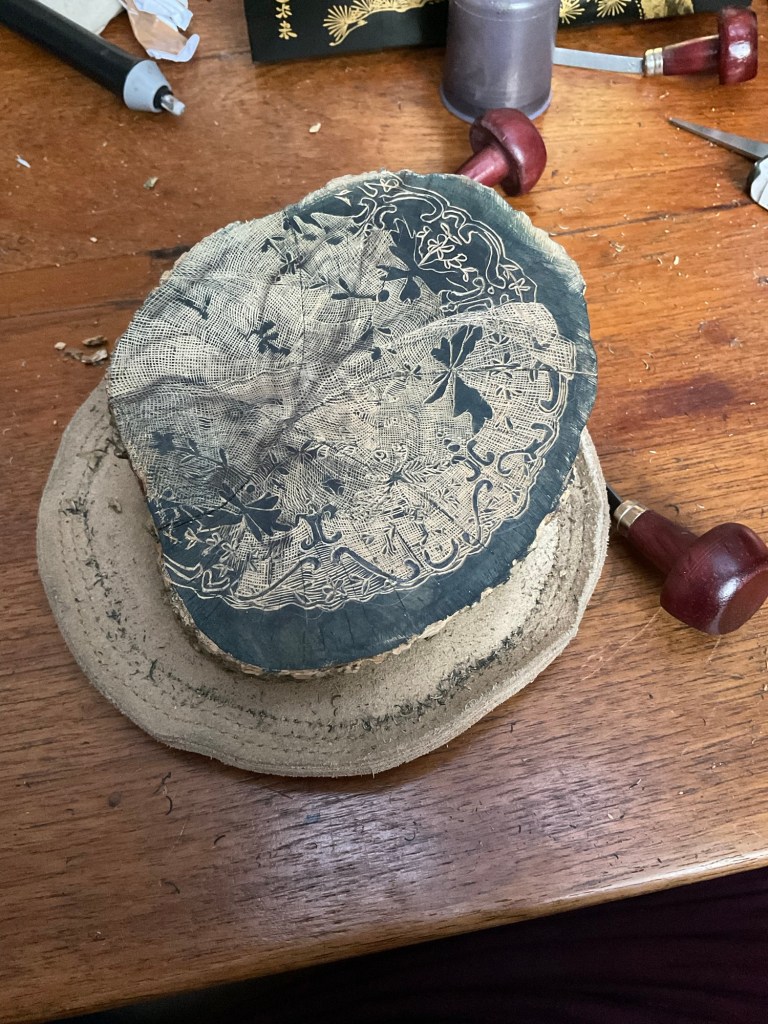
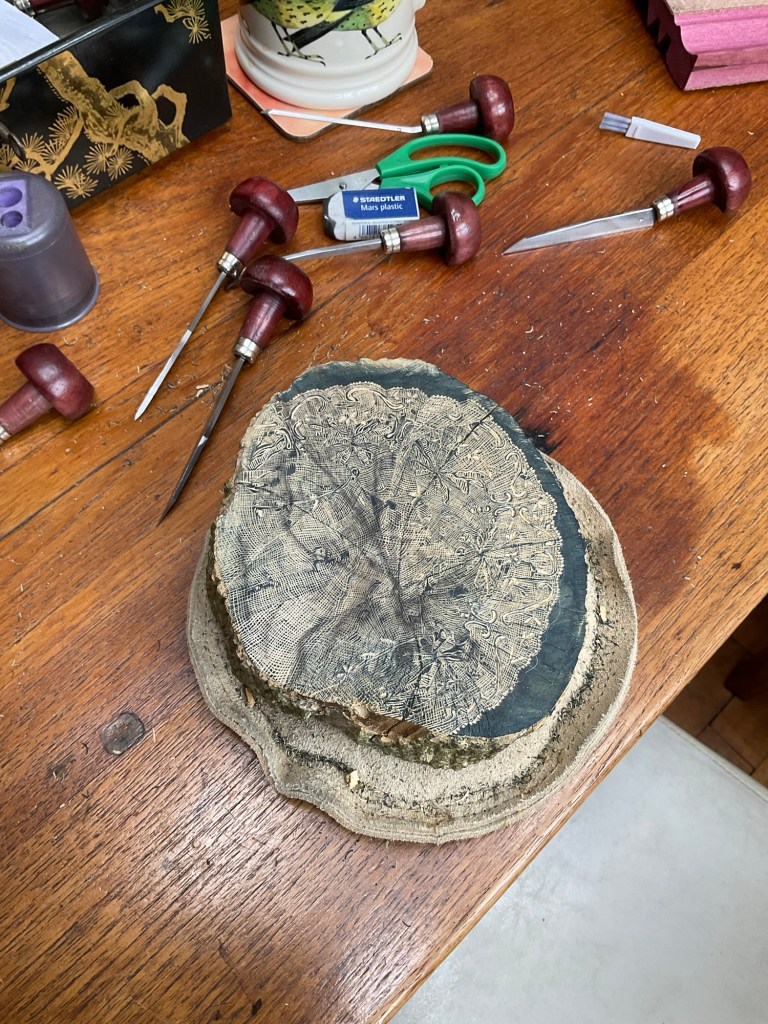
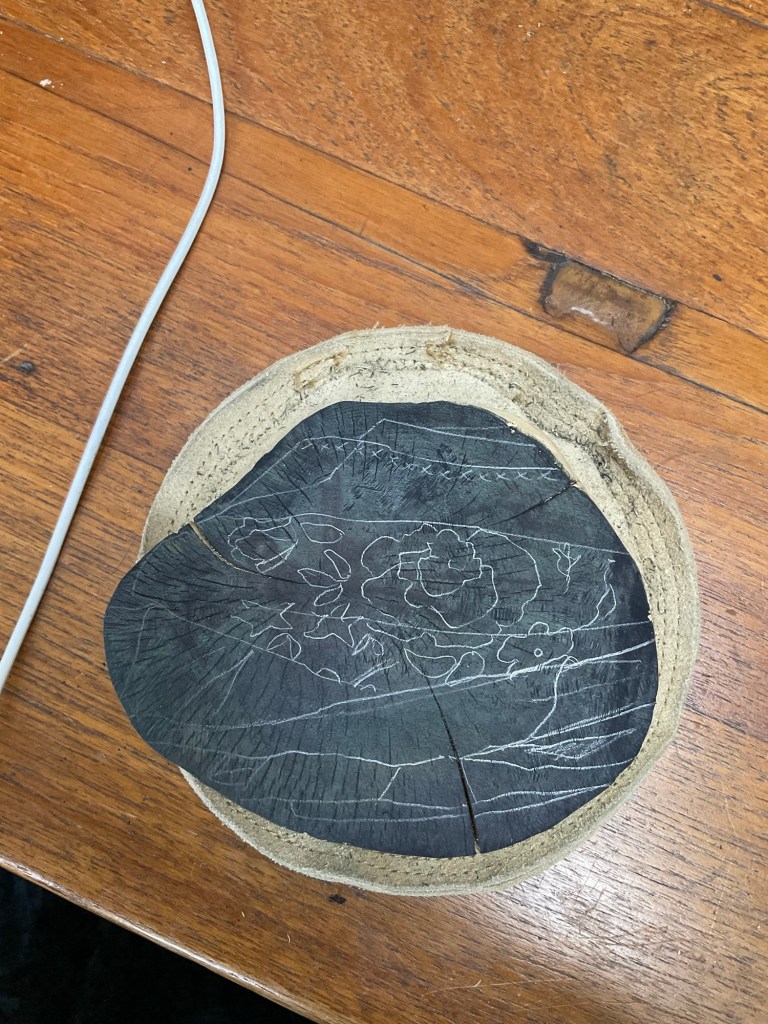
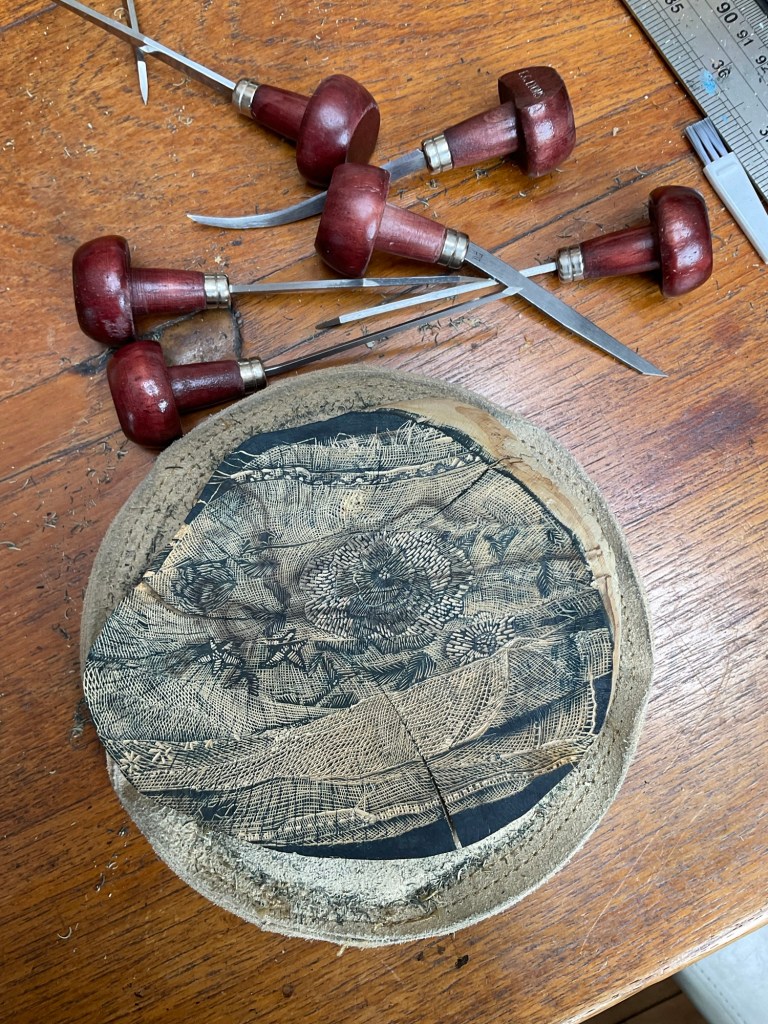
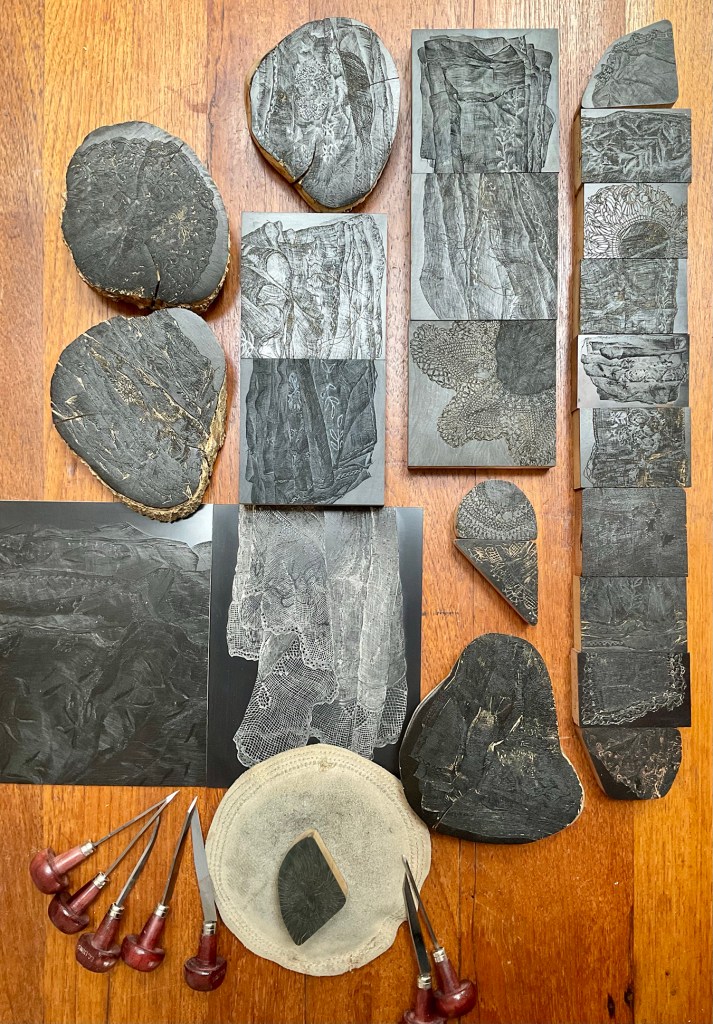
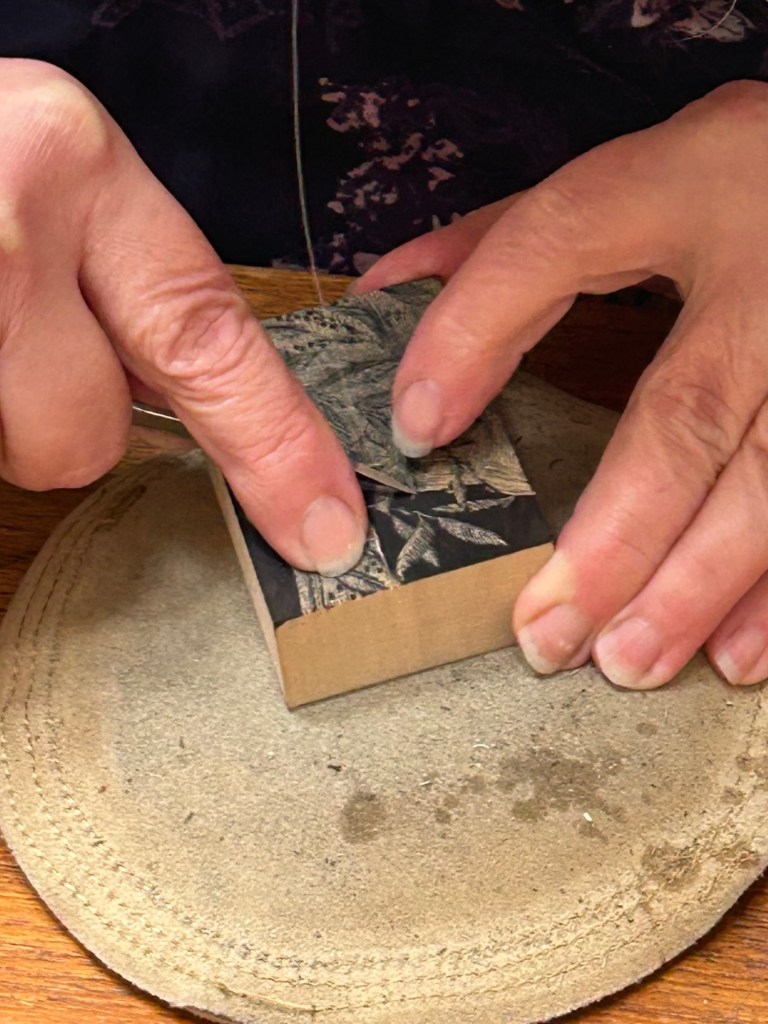
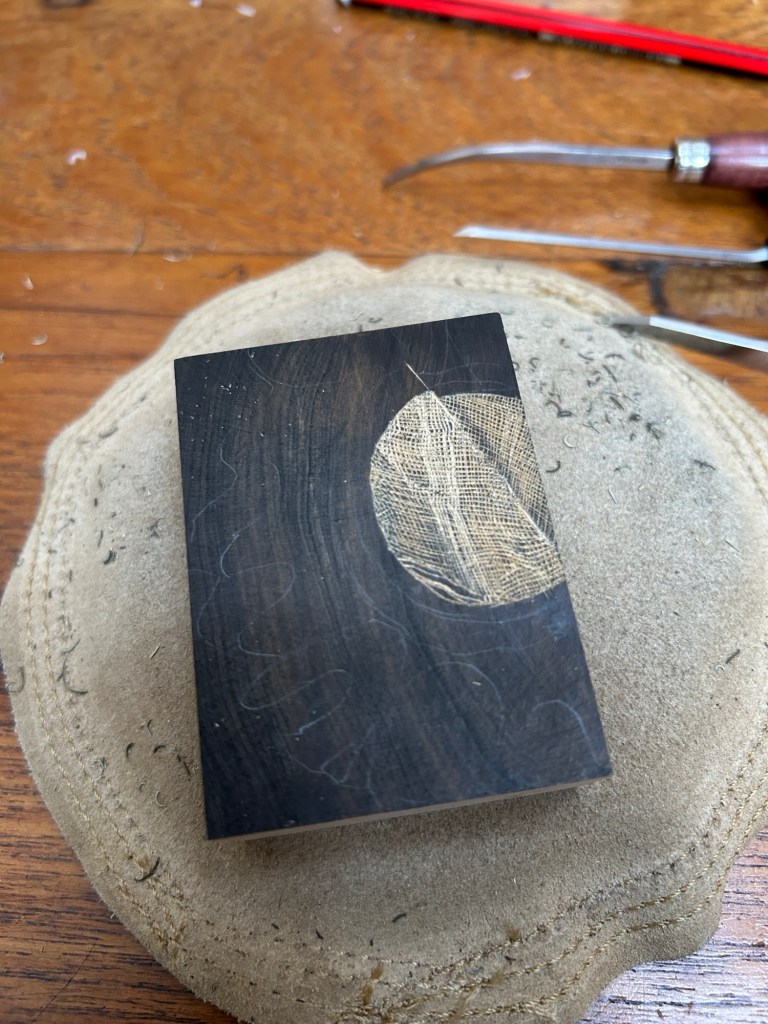
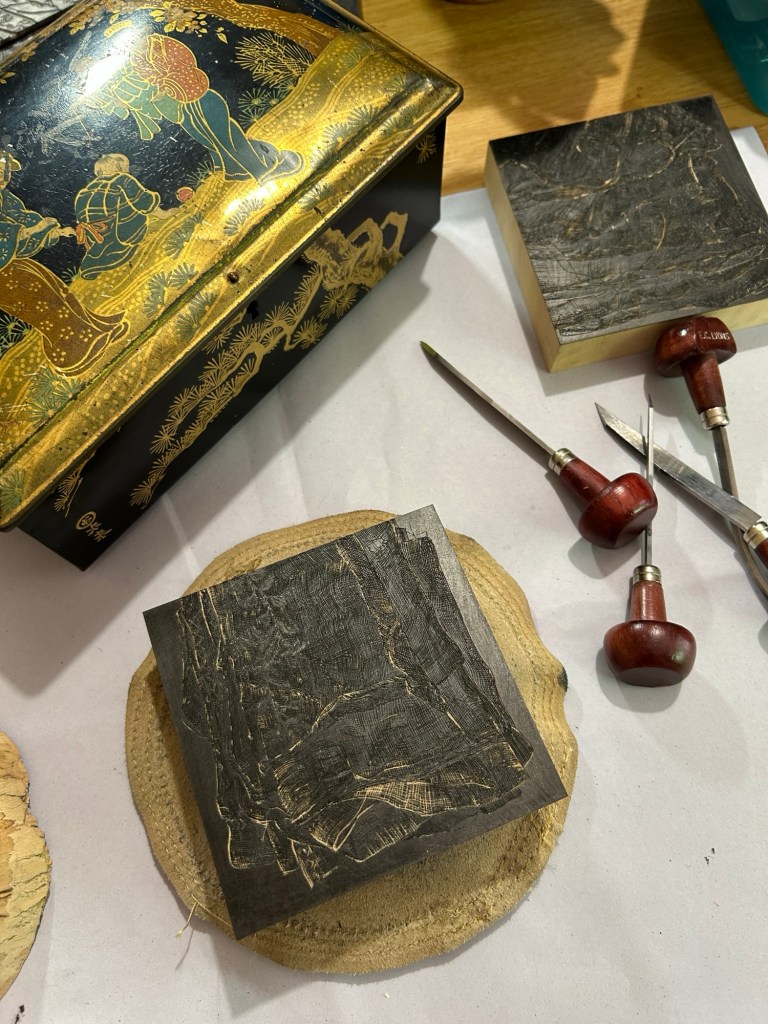
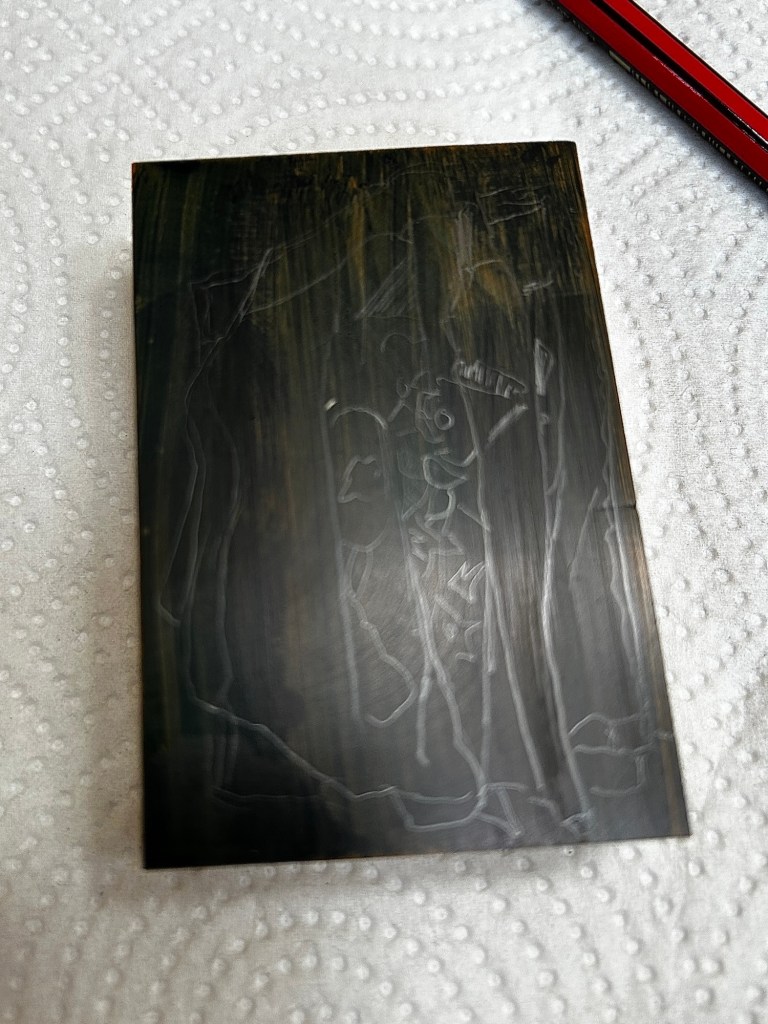
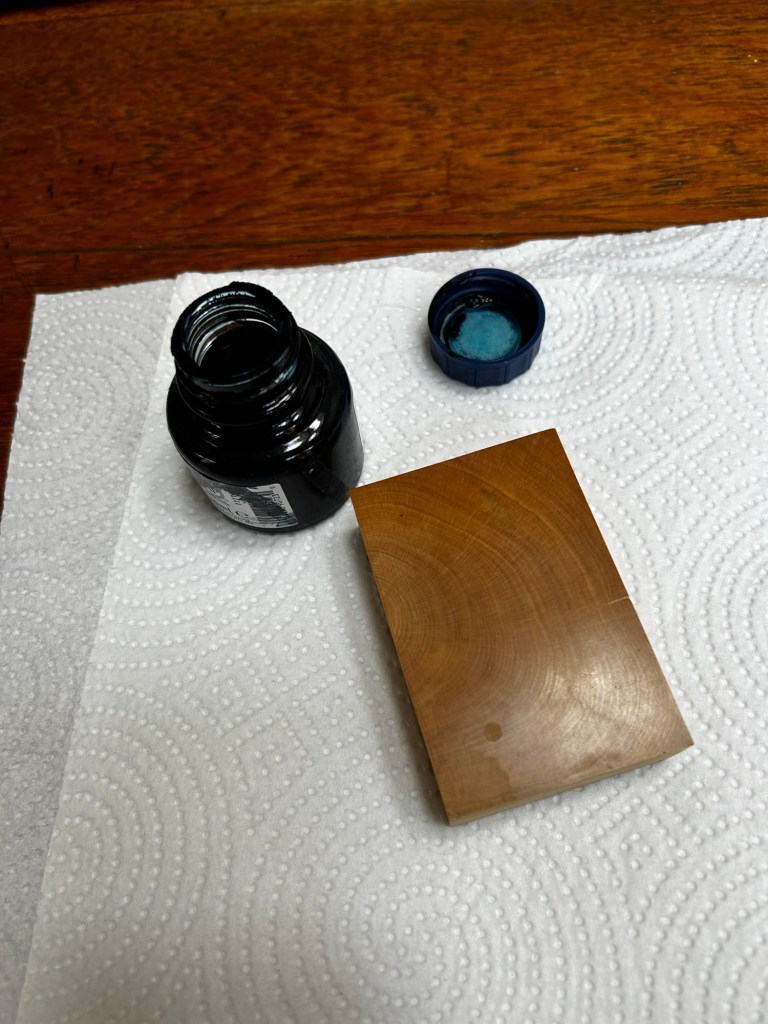
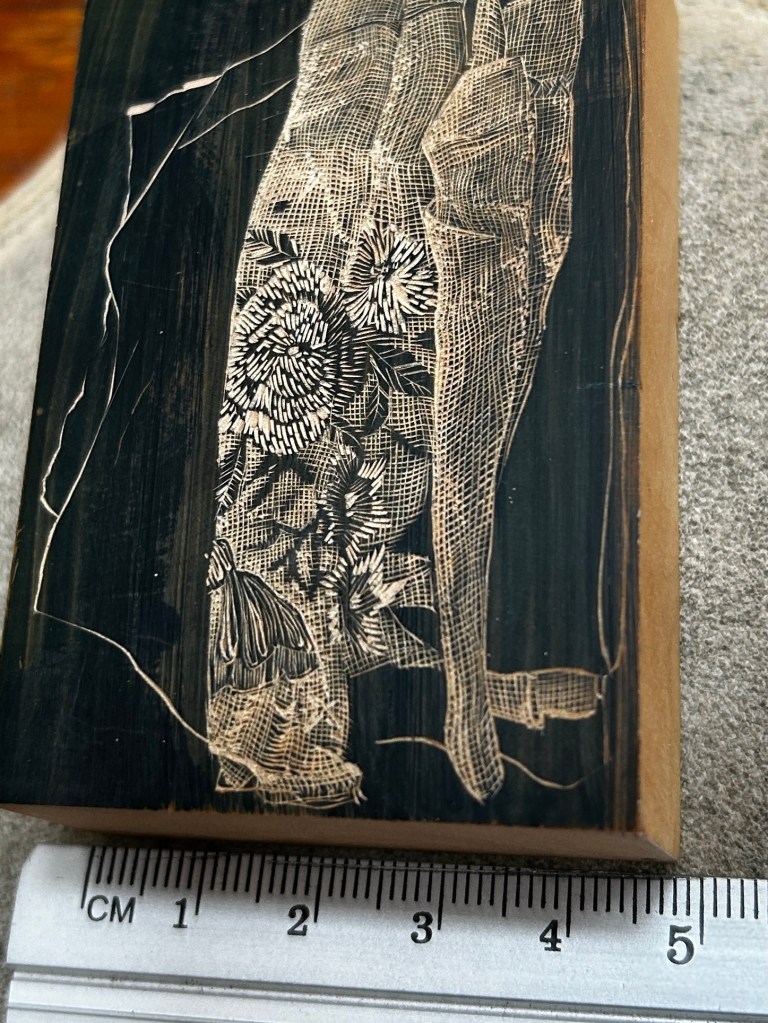
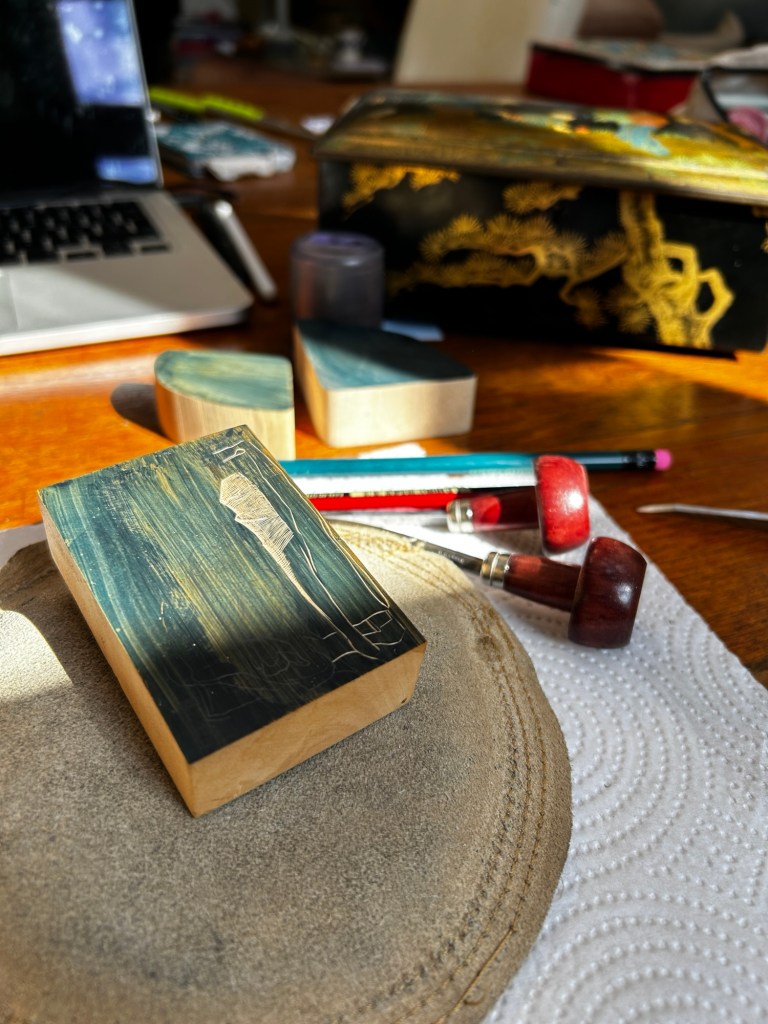
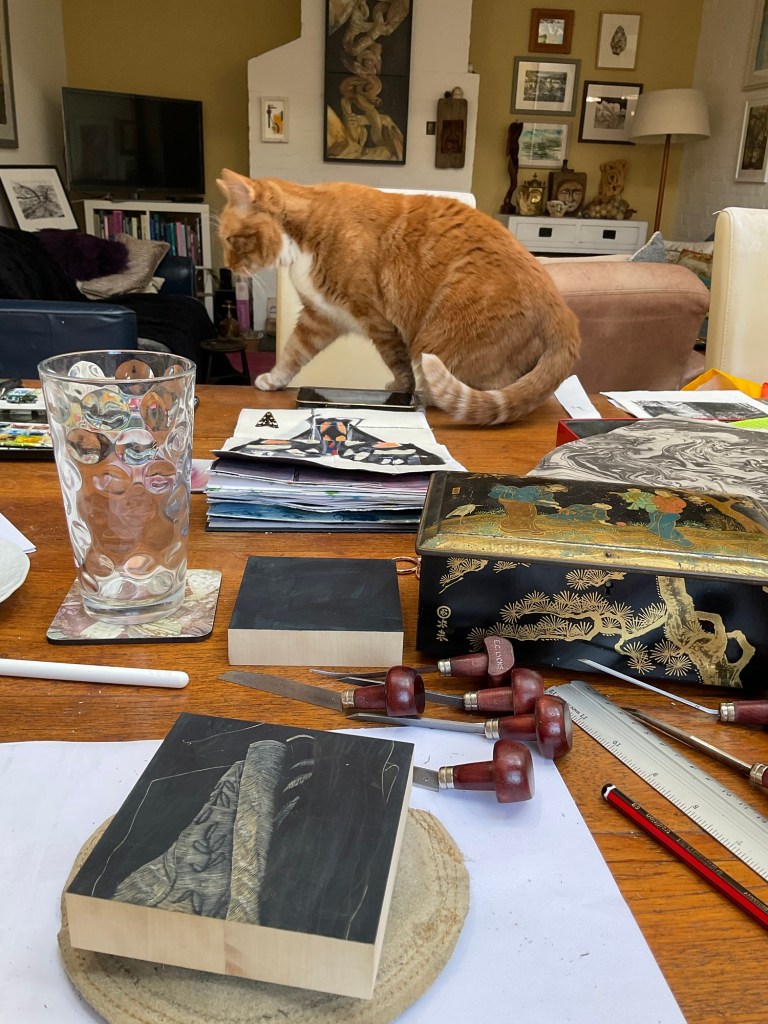
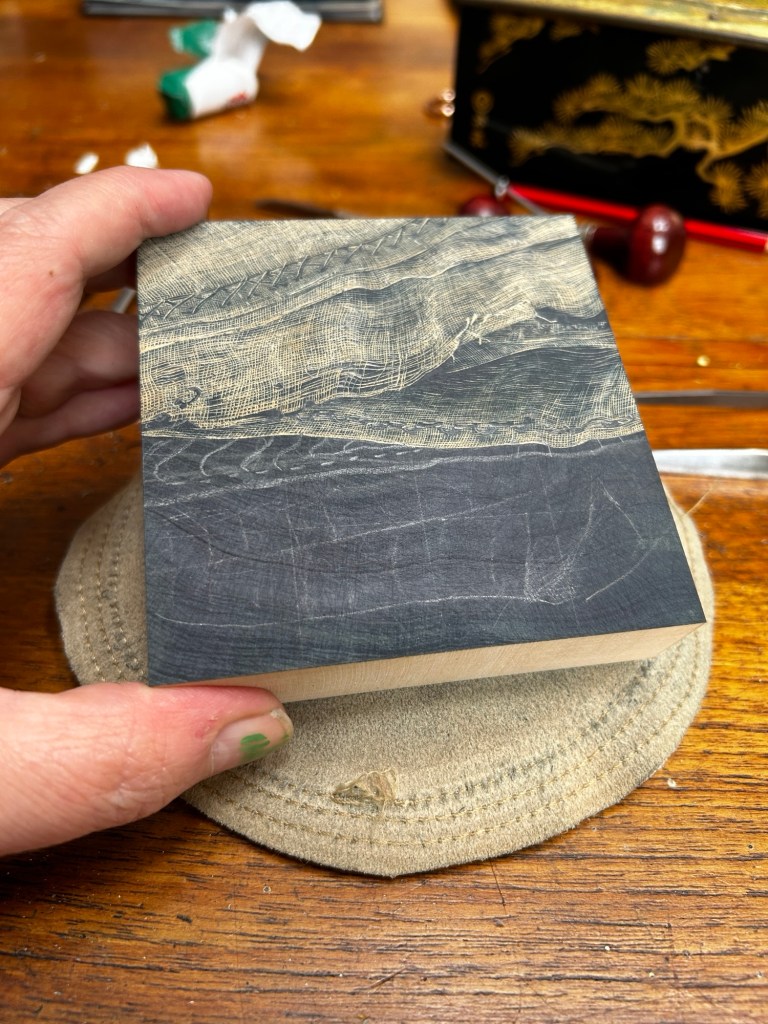
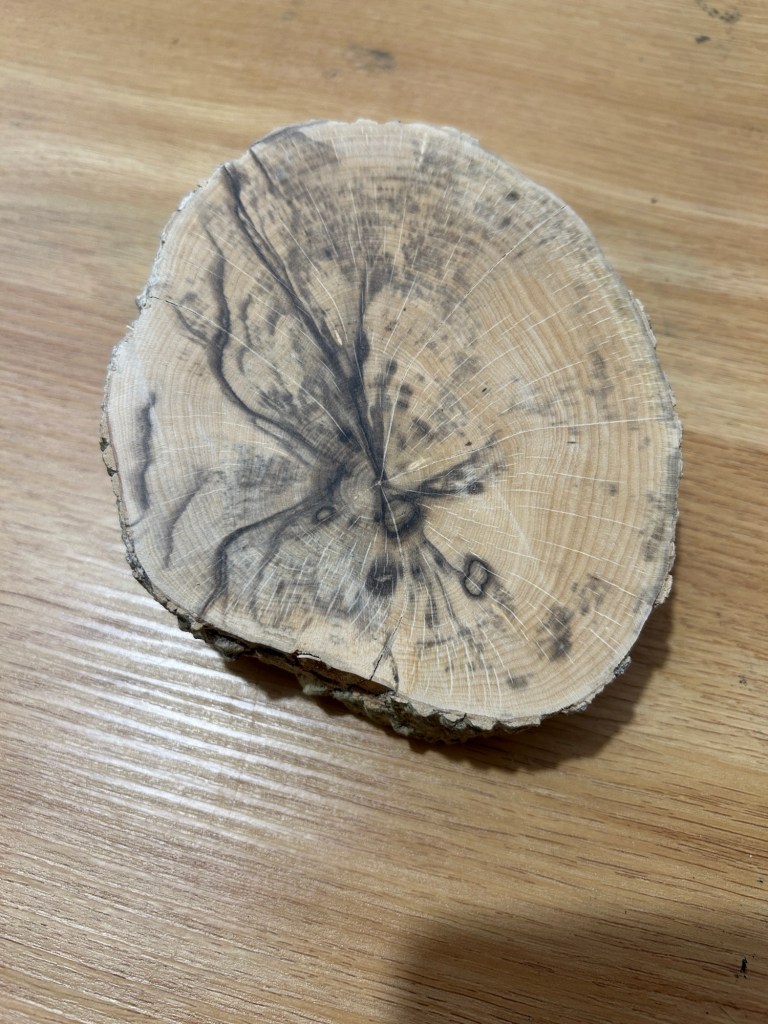
Largely Stephen wins, as he is an amazing wood carver, but I have started to take a few discs of end grain boxwood, which has been seasoned and then we do our best to sand and smooth the surface. I love the cracks which have naturally formed during it’s drying process and feels a natural way to convey the rips and tears of my Heirloom series. I love the blocks as objects in their own right too, so tactile and chunky and I plan to find a way to use them, when I’ve finished printmaking with them.

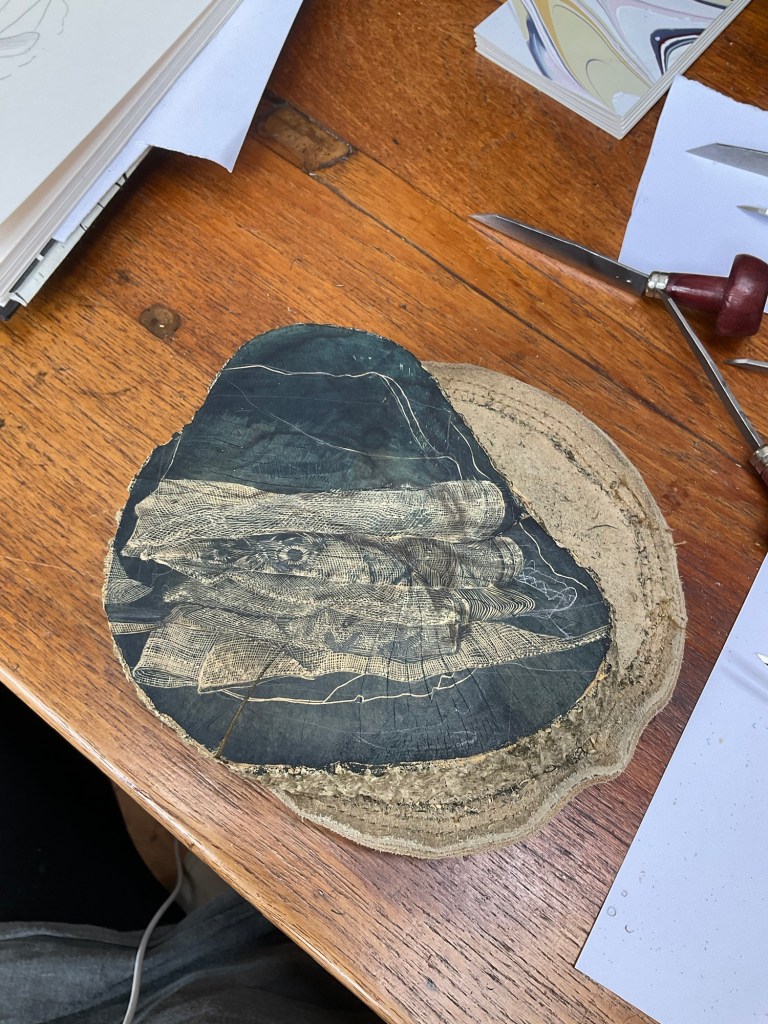
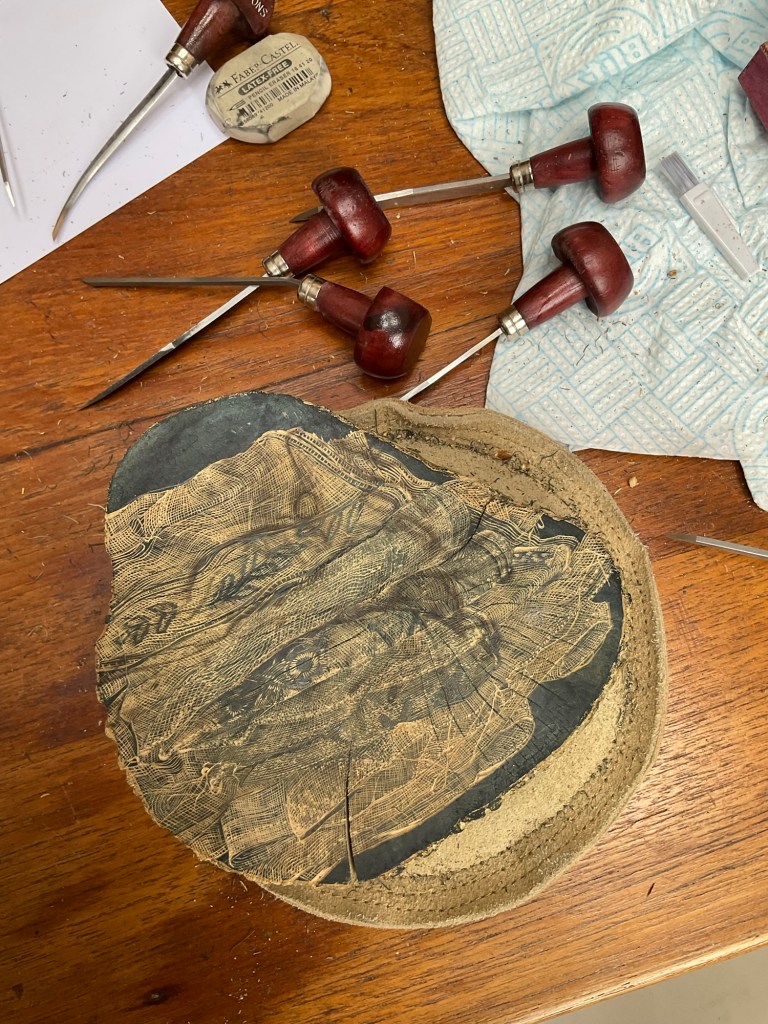
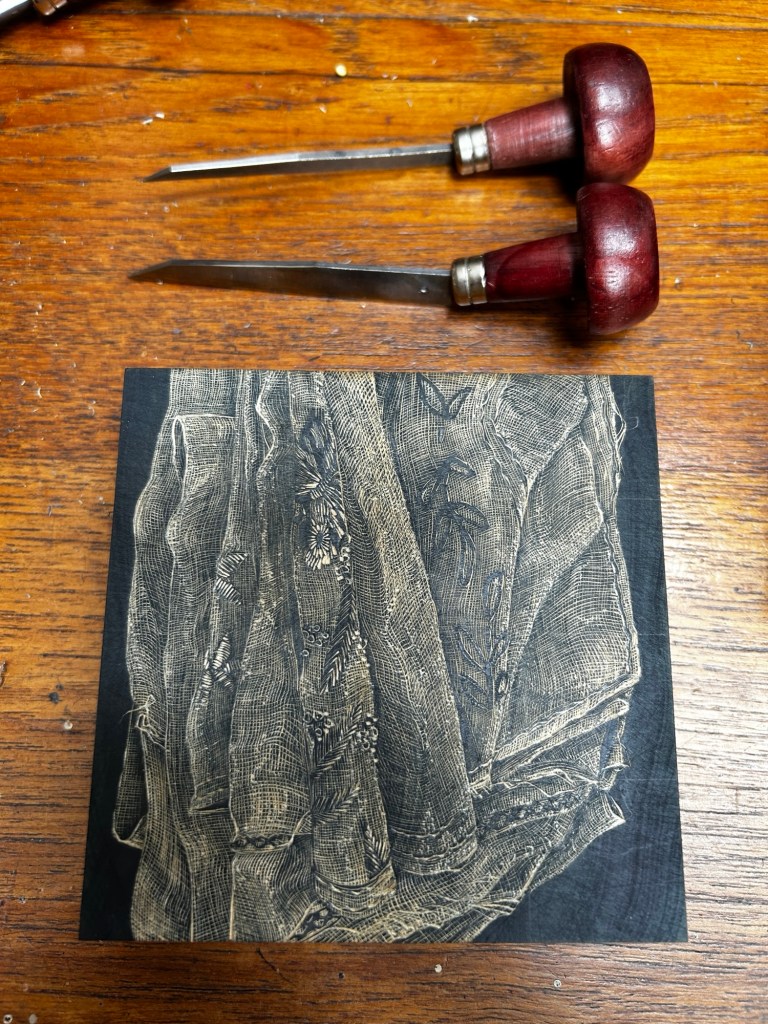
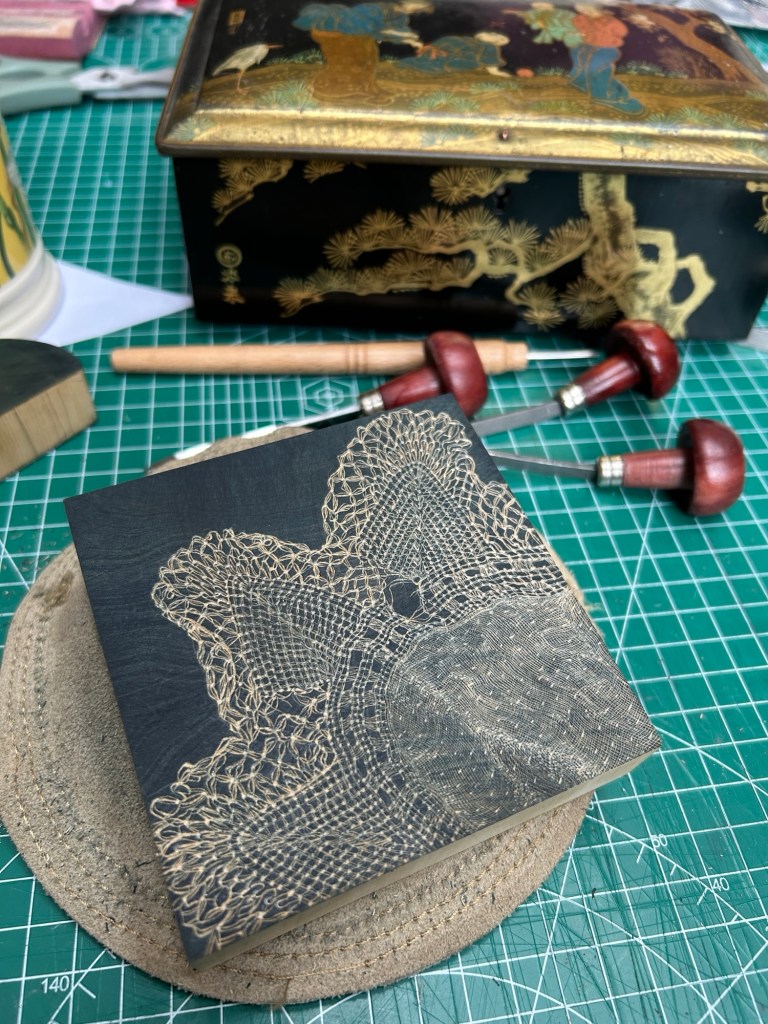
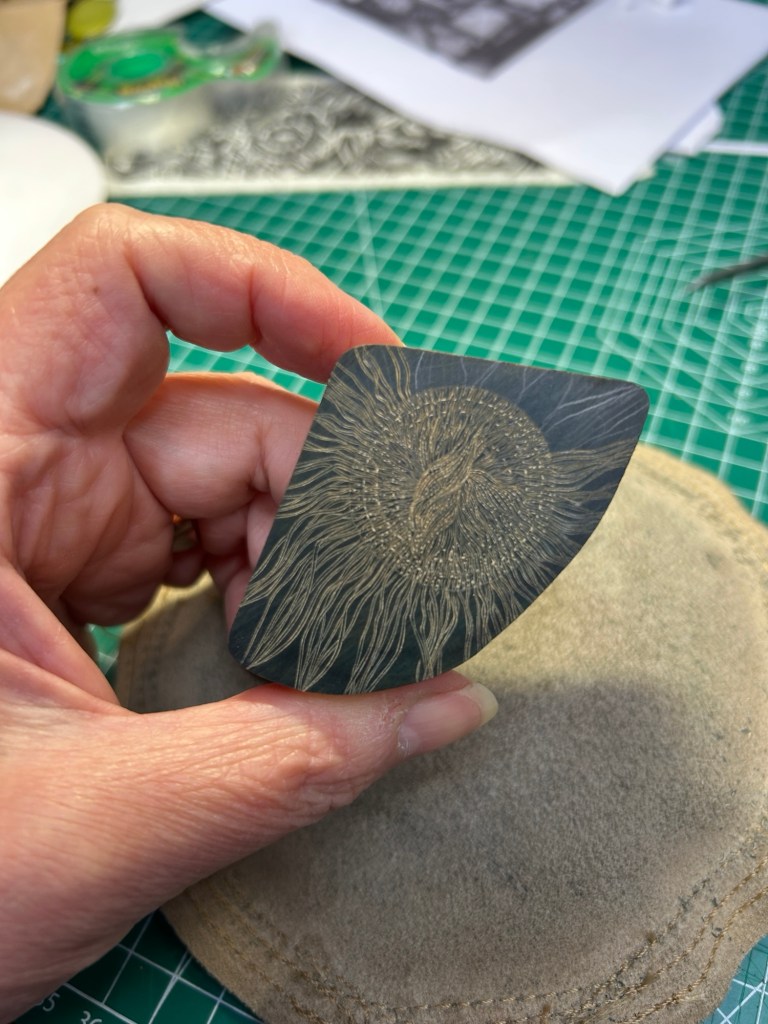
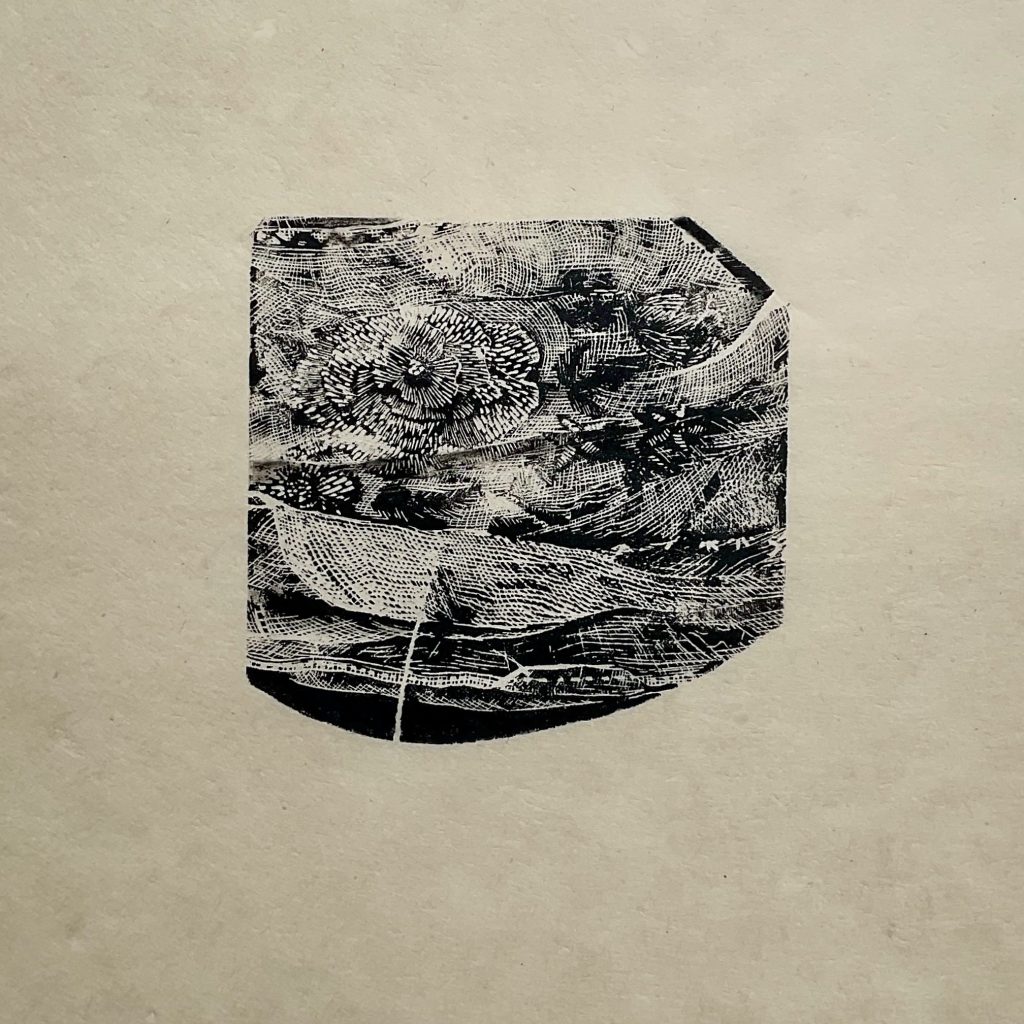
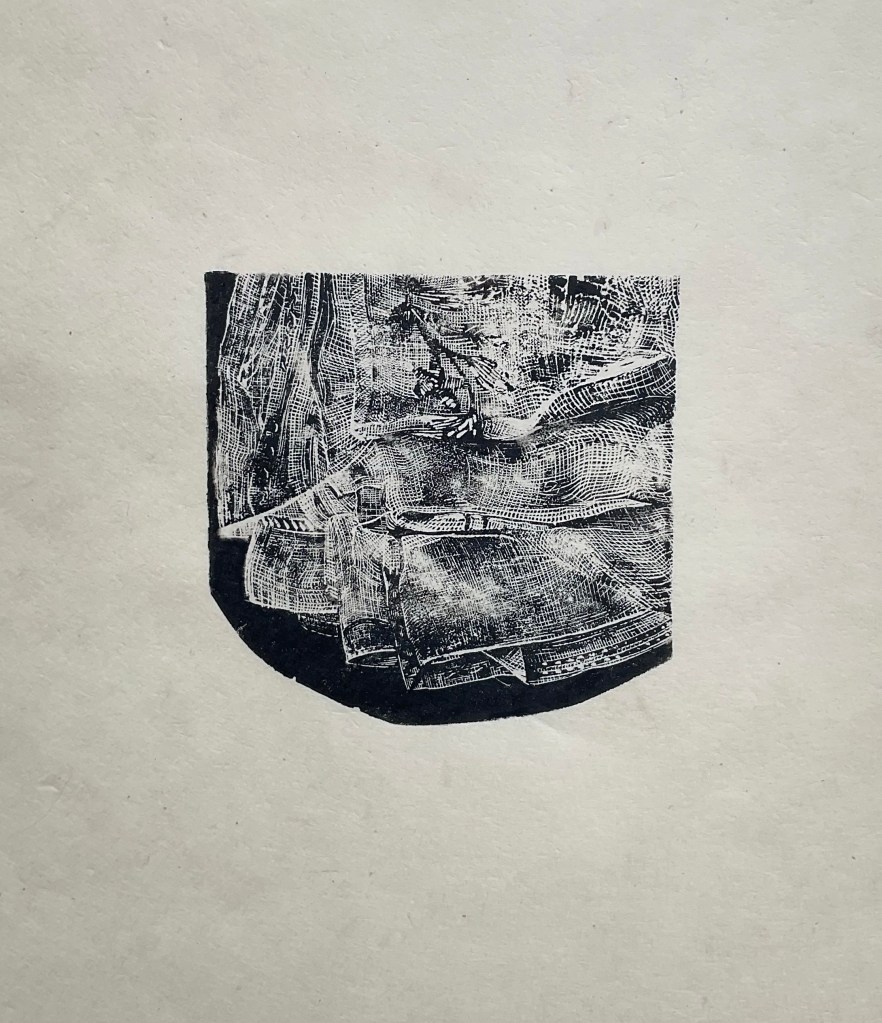
Here are a few images of the wood blocks we made. We need to improve our range of tools to get a smoother result, but it is hugely satisfying to use our own material. We have a large piece of box still seasoning, so watch this space….
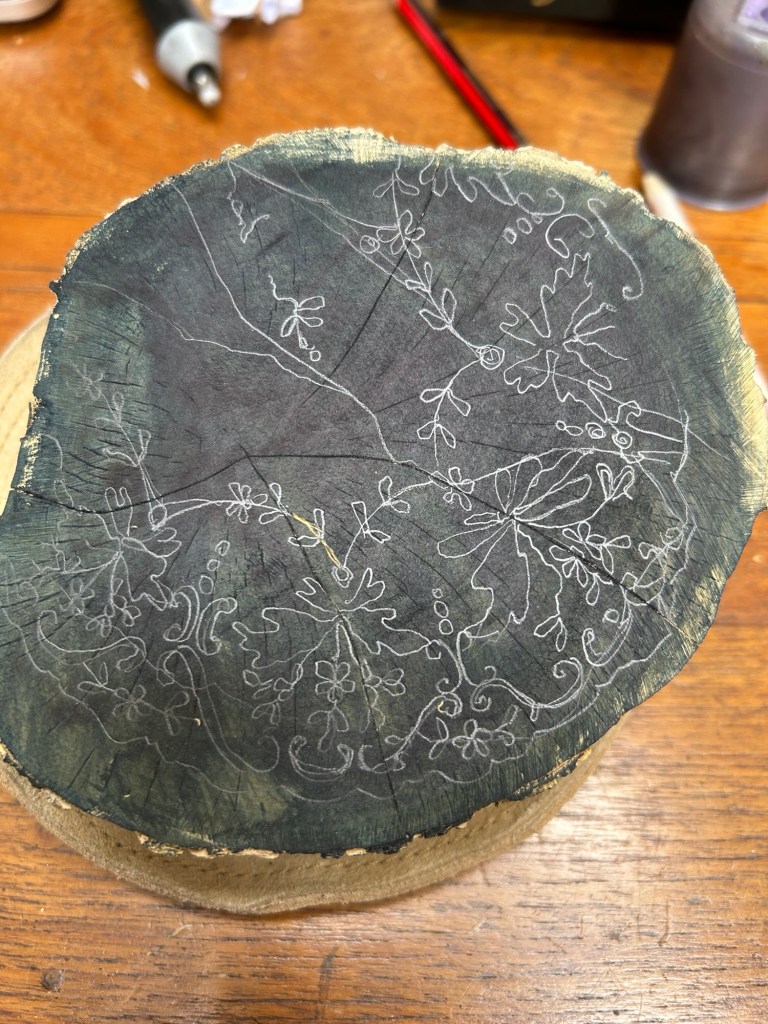
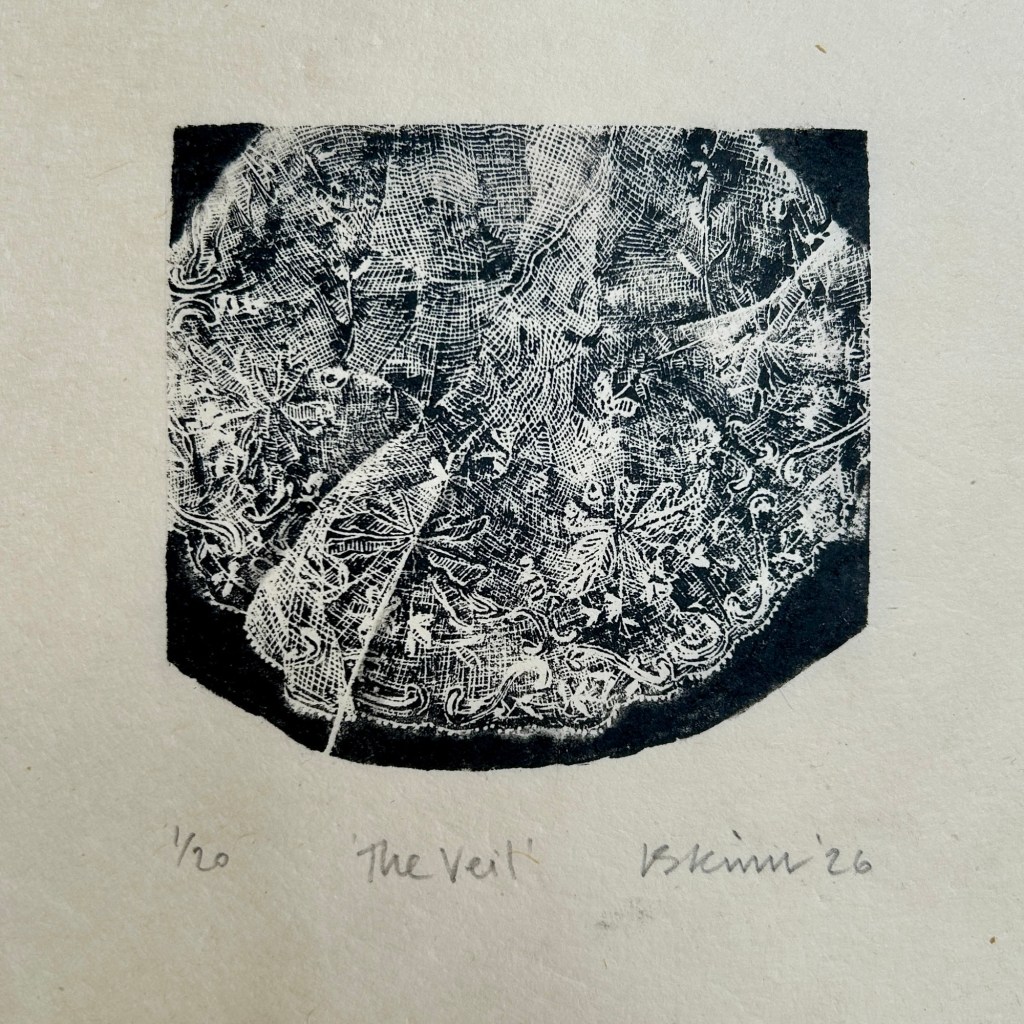
Here are the results that were selected for the Leicester Print Workshop Small Print International Show 2026. They were reduced in size to fit the brief.
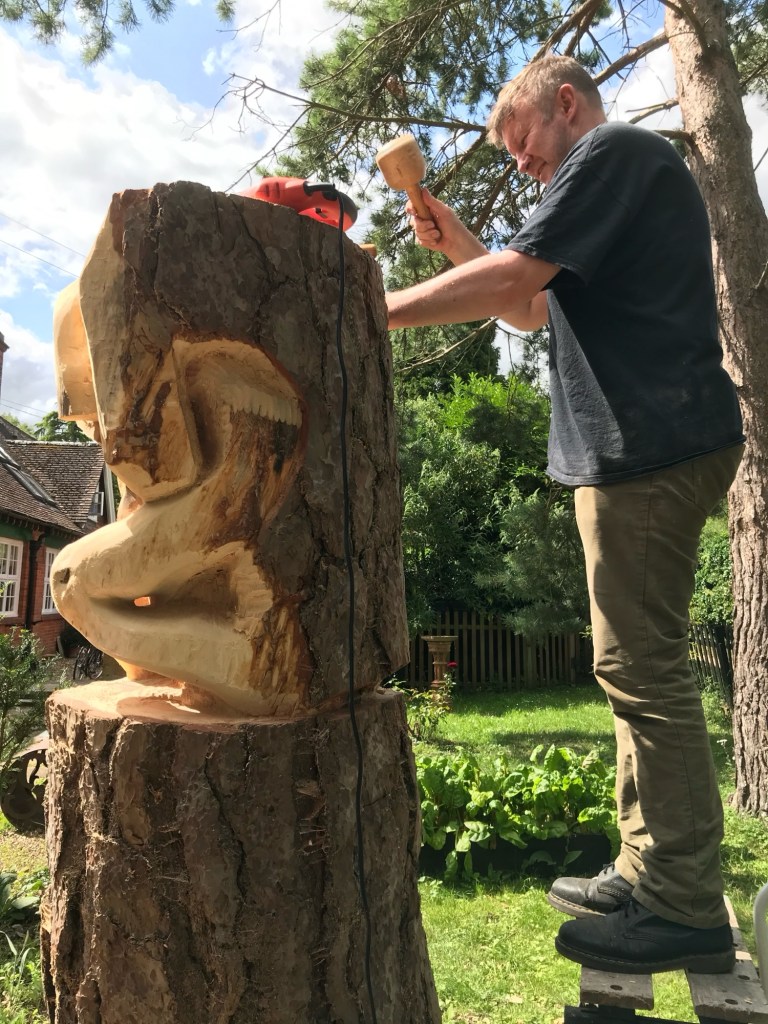
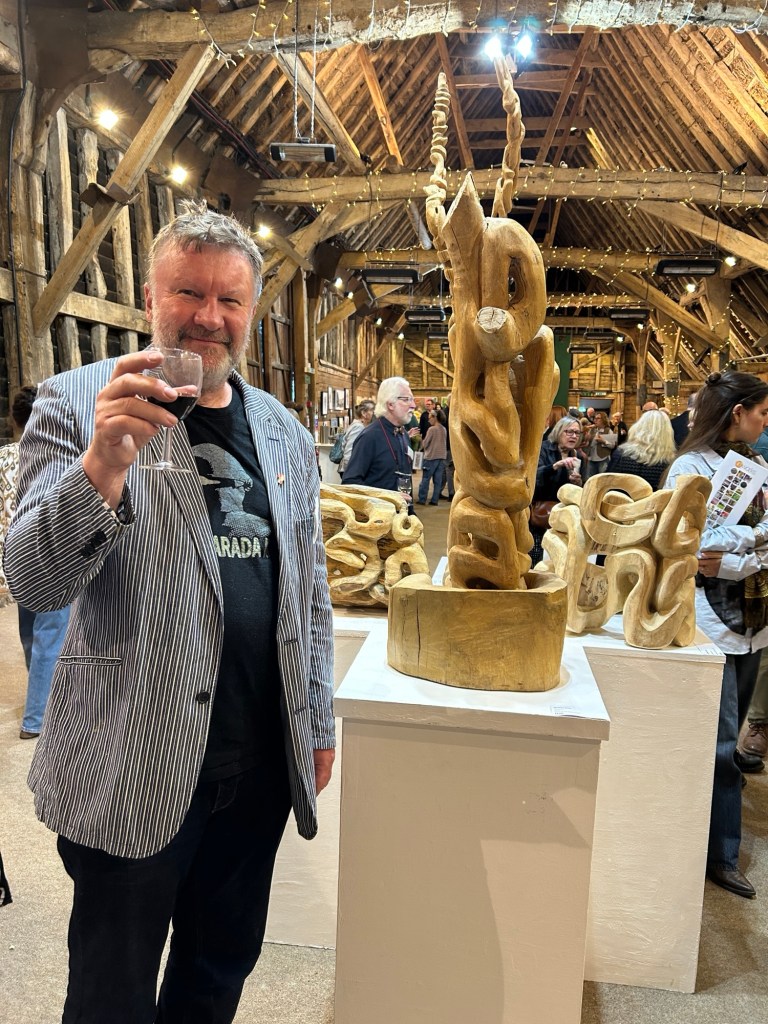
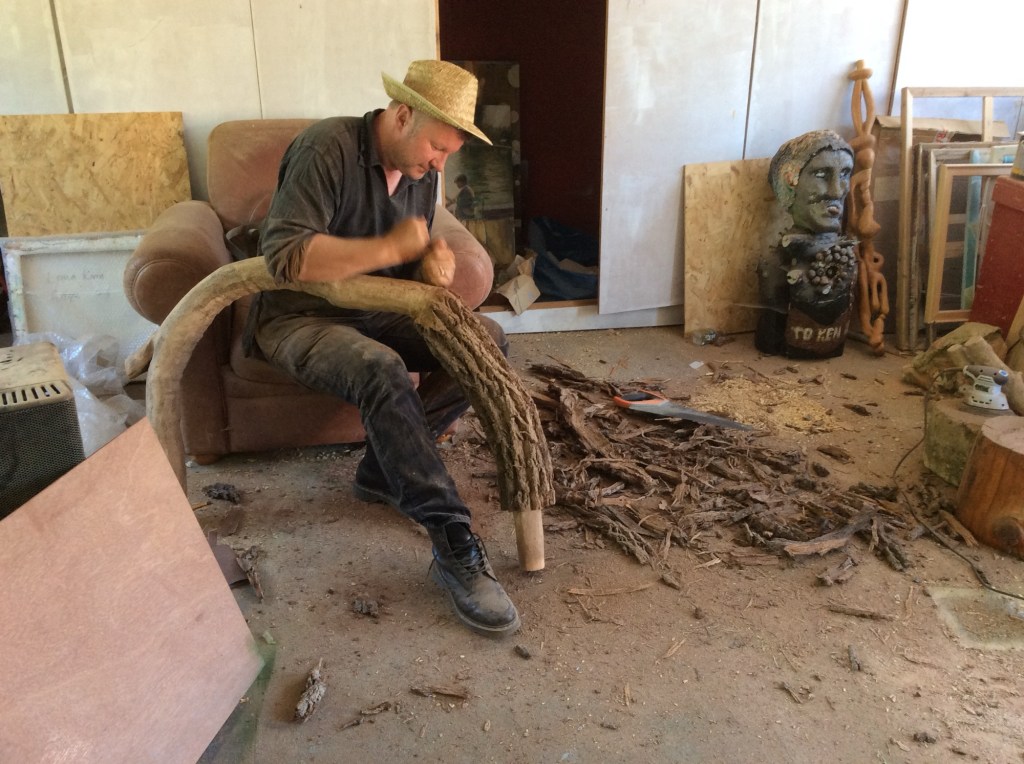
As I say, Stephen is a wood carver, as well as a painter, poet and printmaker. Please do have a look at his website for more information. Here are a few examples of his carving…
Wood Engraving, 2026

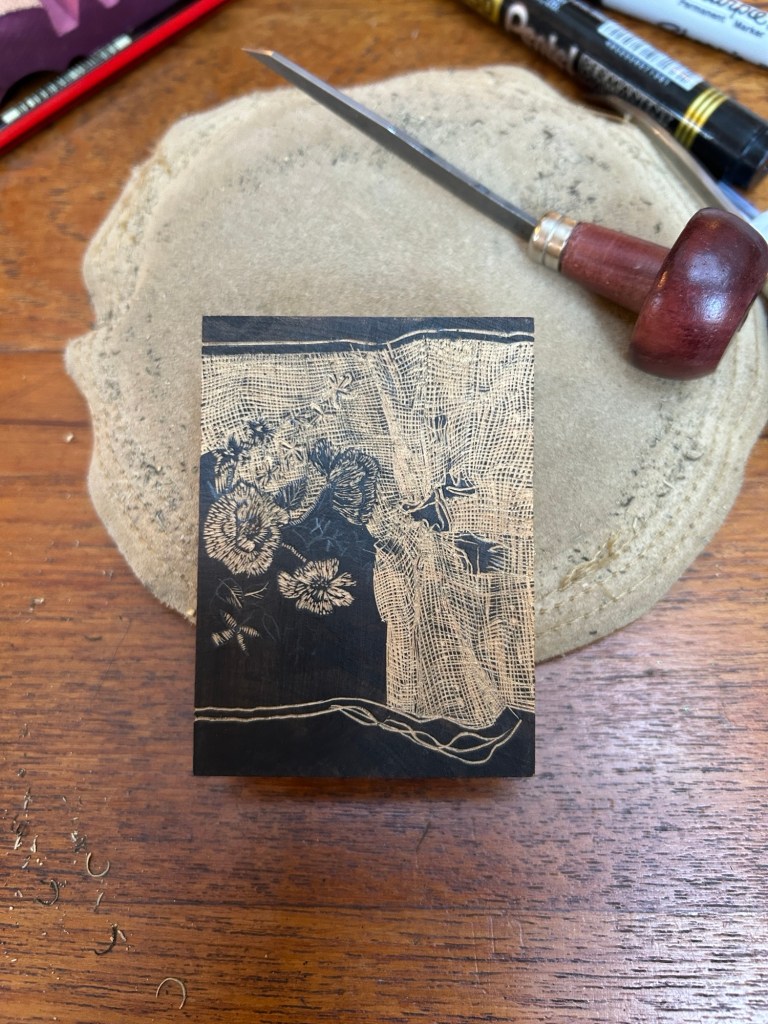
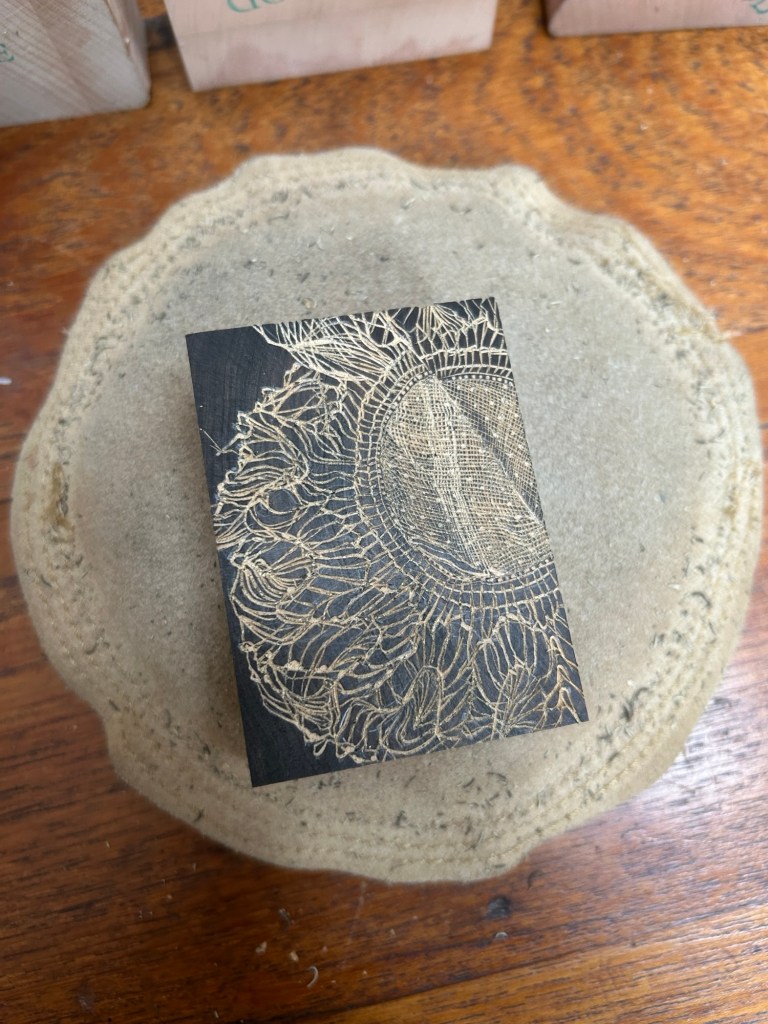
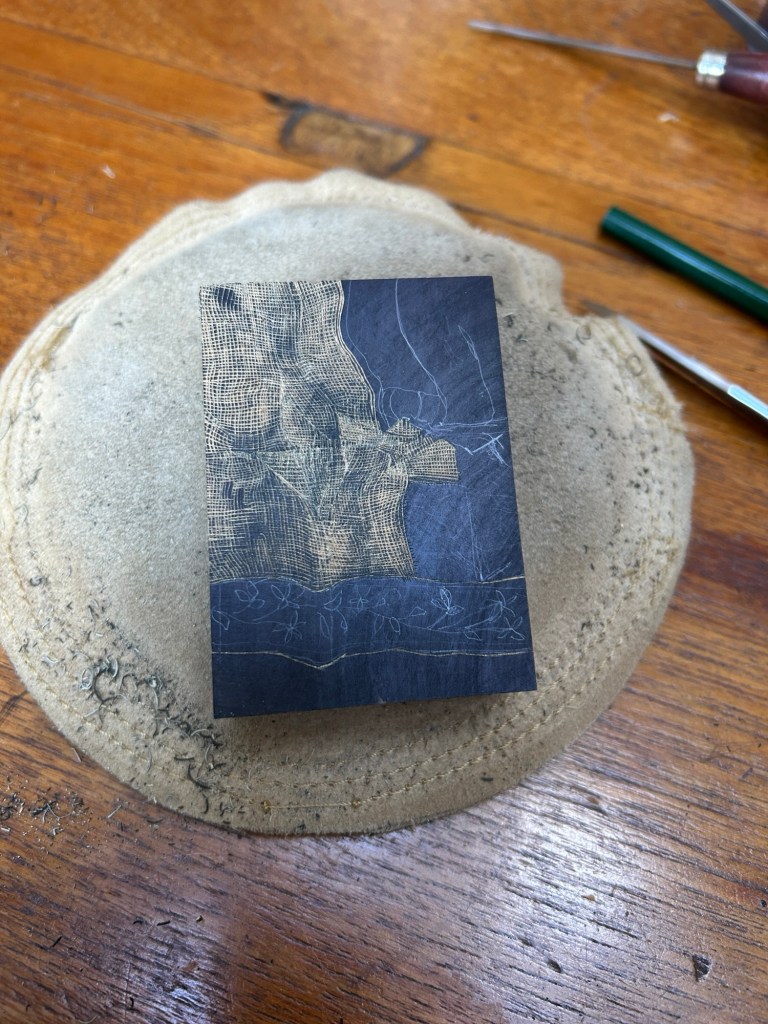
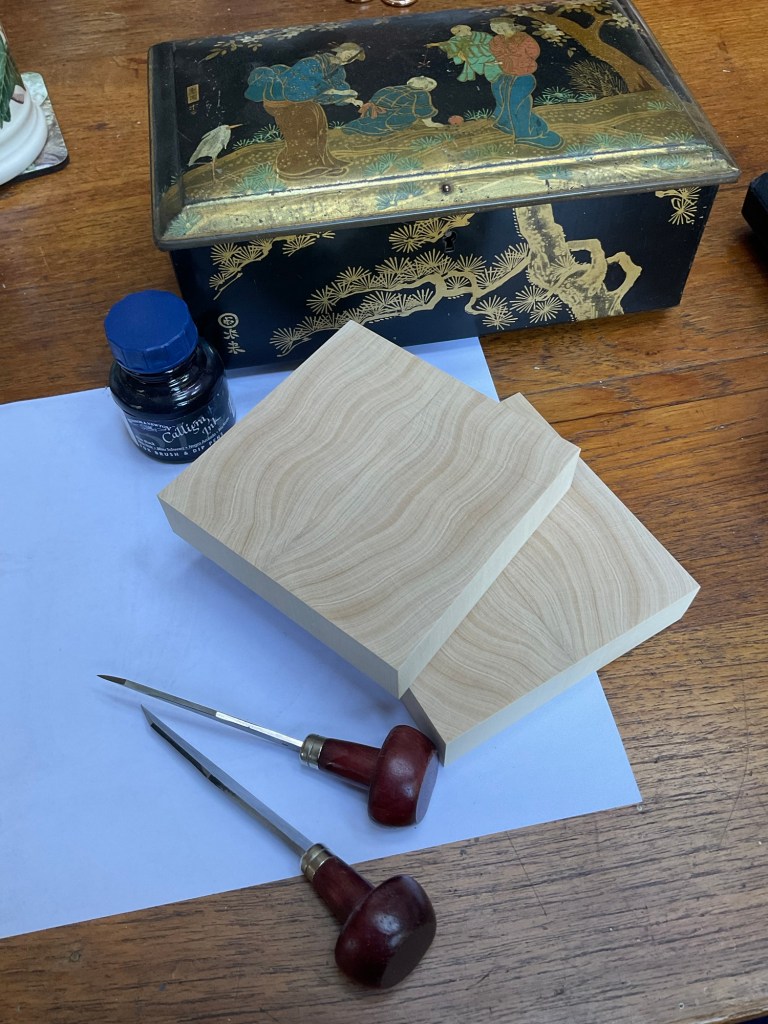
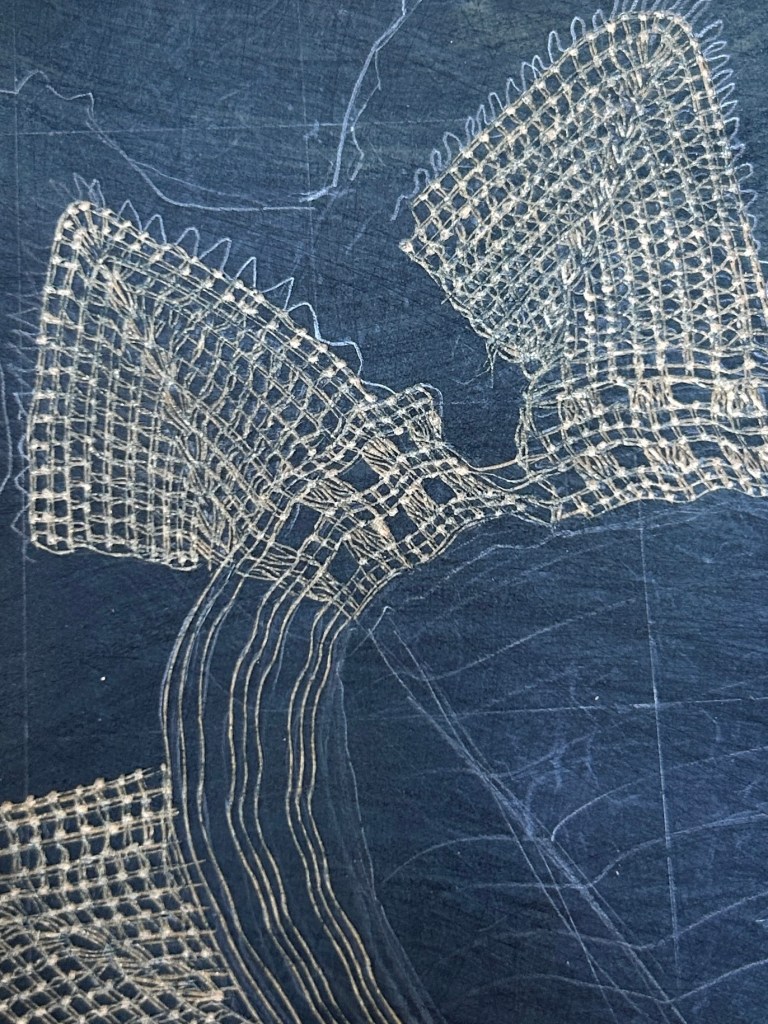
It has been quite a year and as I write, I realise that my wood engraving journey has been bookended by winning the Society Of Wood Engravers Prize at the RE International Original Print Exhibition both in 2025 and just a few weeks ago in 2026. Their very generous prize has afforded me the opportunity of purchasing the precious tools that are very much required for engraving either end grain boxwood or fruit woods, such as pear or lemonwood. It has been a truly wonderful learning experience, helped by the advice of respected wood engravers from the RE and the SWE. I have got to grips with the fabulously named spitstickers, scorpers and gravers developed over the centuries to produce the level of detail I have wanted to achieve.

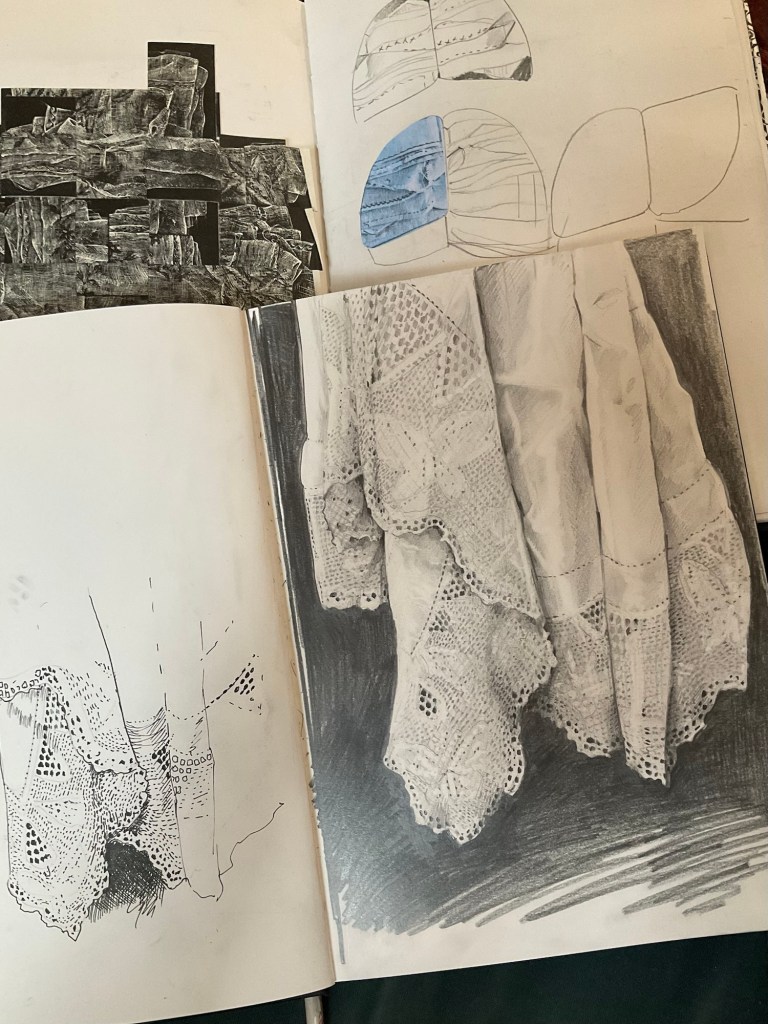
Since receiving the tools and wood blocks from Chris Daunt, I have spent most of my year exploring the possibilities of this noble print process. I have found it to be the perfect medium for conveying the intricacy of my heirloom textiles. Each tiny line conveys a thread, stitch, loop or tear, preserving the memory of my family now passed. Further to this, as a carer for my rather fragile 91 year old mother, the connection seems even more visceral. She now has dementia and the feeling of these pieces of lace and embroidery provide an occasional moment of clarity that we can share. I show her every stage of my engraving and she gets pleasure from feeling the fine surface and seeing the resulting prints. She too was a very able embroiderer, which sadly has now eluded her, but the art is alive for her still through our short conversations each day.

Each block is printed with letterpress ink and hand burnished (with the back of a spoon quite often) on Awagami papers. I favour Shiramine Select and Kitakata for their softness and versatility. My husband and I are currently learning Japanese and hope very much to return to Japan to visit the Awagami factory for a papermaking workshop. That would be a dream come true and if we could converse a little too…!

There are so many possibilities with the resulting blocks. I like to juxtapose them, to collage fragments and thank Anne Desmet sincerely for the suggestion of printing them on Japanese tissue paper to explore reflected imagery.

I have been fortunate to have been selected for many prestigious exhibitions this year, including the RE International Original Print Exhibition (SWE prize 2025 and 2026), The RBSA Print Prize (awarded Highly Commended) and RBSA Summer Show, Leicester Print Workshop Small Print International and the Ironbridge Printmaking Competition. I was also proud to have been selected to exhibit at The Norwich Print Fair and Print fair East in Bury St Edmunds. I was also selected for the Inprint Director’s Cut for a drypoint ‘Tea Dance’… more of those in my next post…
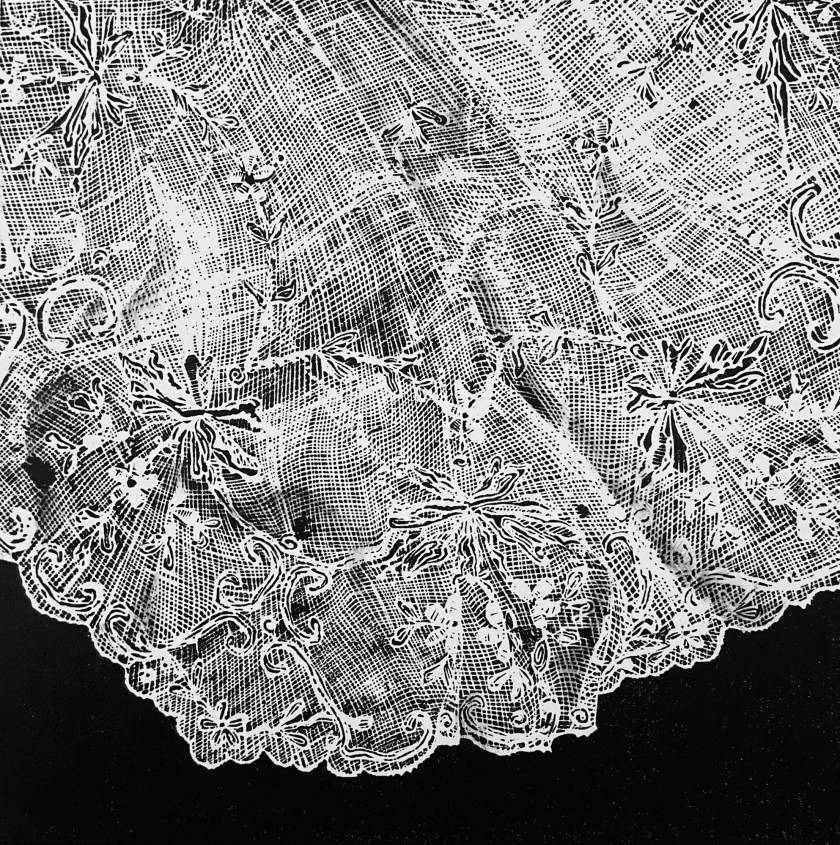
I am so looking forward to 2027 and all the print possibilities it may bring!

A little footage of ‘Unfold’ unfolding …

Print practice and expanded themes

I am intensely drawn to the intricate and seek to render a printed image that explores the fragility and preservation of skills that have almost slipped off the historical timeline. Marks made with fine tools are perfect to describe the tension between the linear and bolder areas of ink. My focus aims to describe points of rhythm, as well as inevitable loss when observing the intrinsic beauty of antique textiles, the cracked and crazed, or fragmented clues to the hands that so expertly created them.

I tend to choose to work in black and white. I prefer this, as I am not aiming to replicate the subject matter. For example, I could have reduced the lino to develop colour in some of the Heirloom embroideries, but I feel that the resulting image could have been interpreted in a different way. Instead I wish the primary focus to be a conversation with the hands that made, repaired or reassembled my subjects that are now fixed in print.

See my last blog post for further information about my Heirloom series, but here I will explore how I am developing this theme.

Stained Glass

We are very fortunate here in Suffolk, UK to have a significant collection of medieval stained glass in our churches. They are absolutely stunning and we are so lucky that many have survived hardship over the centuries. My initial interest was sparked by the extraordinary reassembled panel in Moyses Hall, our local museum. Here small fragments of glass were found from exacavations around the site of the original Abbey (I think) and re-leaded to form a mosaic of fragmented imagery. Each piece treasured and thoughtfully positioned.

I have been cutting tiny pieces of lino over the last year or so, replicating this act of retrieval and have begun experimenting with the pieces I have carved. I have about 40 pieces so far and it has been an absolute delight to scrutinise the workmanship in the shards of glass, painted with metallic oxides.

Since exploring the Abbey Glass panel, I have sought out other reassembled shards, which has taken me to Long Melford in Suffolk, where Pevsner noted had the finest collection of stained glass in a parish church, to Winchester Cathedral. Only 10% of medieval glass survived the Reformation in the 1530s and The English Civil War of the 1640s and Winchester was no exception. The Great West Window is absolutely splendid and on close inspection, one can see that again it is patchwork of kaleidoscopic fragments. The original window must have been utterly extraordinary, but it was smashed by the Roundheads who had laid claim to the city during the Civil War. The locals were devastated and undertook the careful collection of every smashed piece. They each took home as much as they could to preserve the glass. The window was re-leaded after the Restoration in the 1660s and finally re-installed. It makes for a very modern rendering now with fabulous abstract forms running through the entire window and I was moved by the story of preservation, repair and restoration… just as my family had done in a simple way with their treasured pieces of handmade textile.

Marquetry

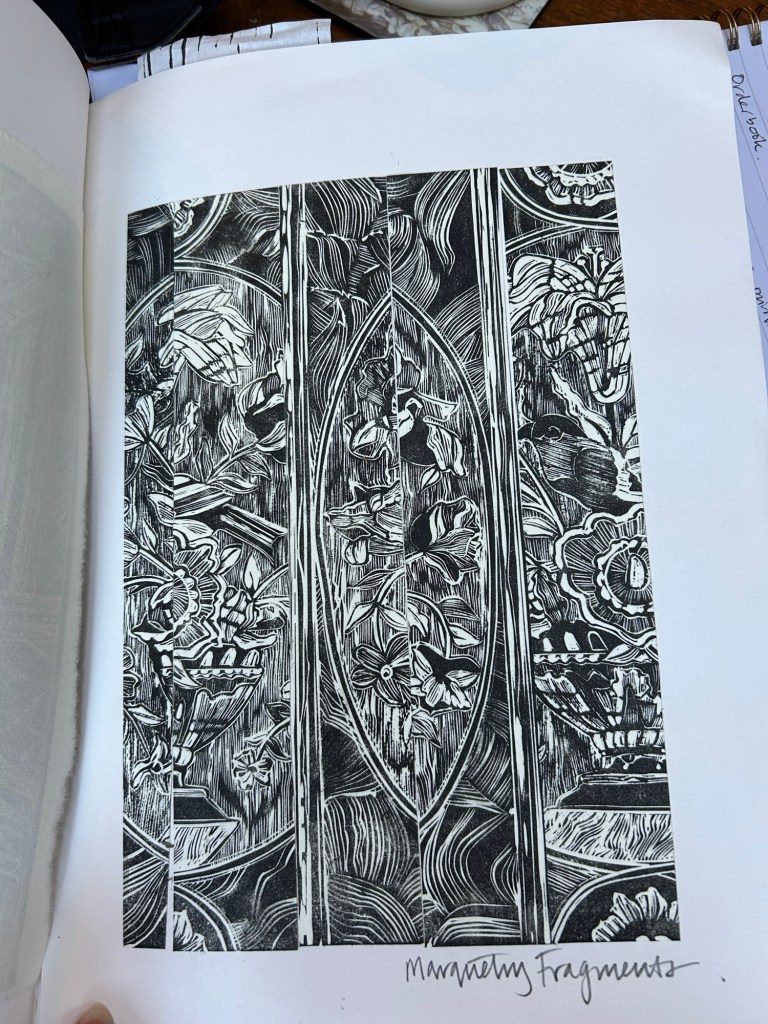
My series of marquetry prints, worked from the collection of 18th century Long Case Clocks further illustrates my theme. The clocks, in a local collection, stand quiet and the intricate wooden inlays are crazed and dry. The patterns on their cases are not supposed to be encasing silence and my prints seek to illustrate this poignant, timeless moment and intend to preserve their intrinsic beauty within my linear marks and composition.

I have carved several linocuts exploring this theme this year. I am considering disrupting them, by cutting the lino blocks into careful strips and reassembling them to create reinterpretations of my own, pushing my practice further.

Cracked Pots

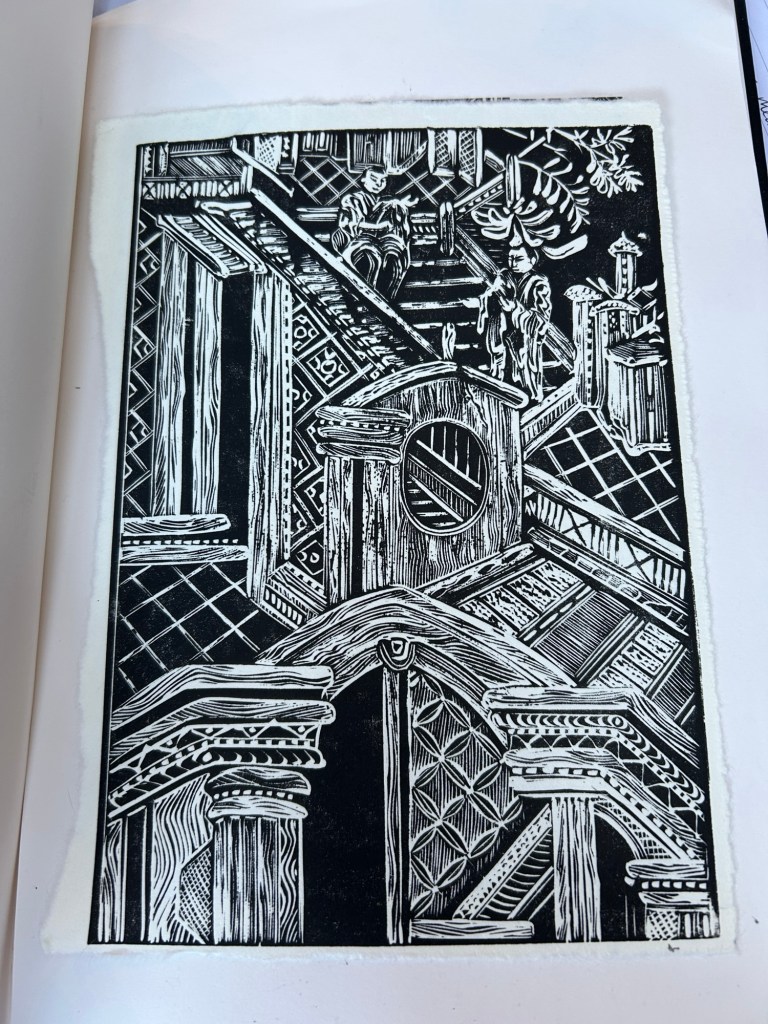
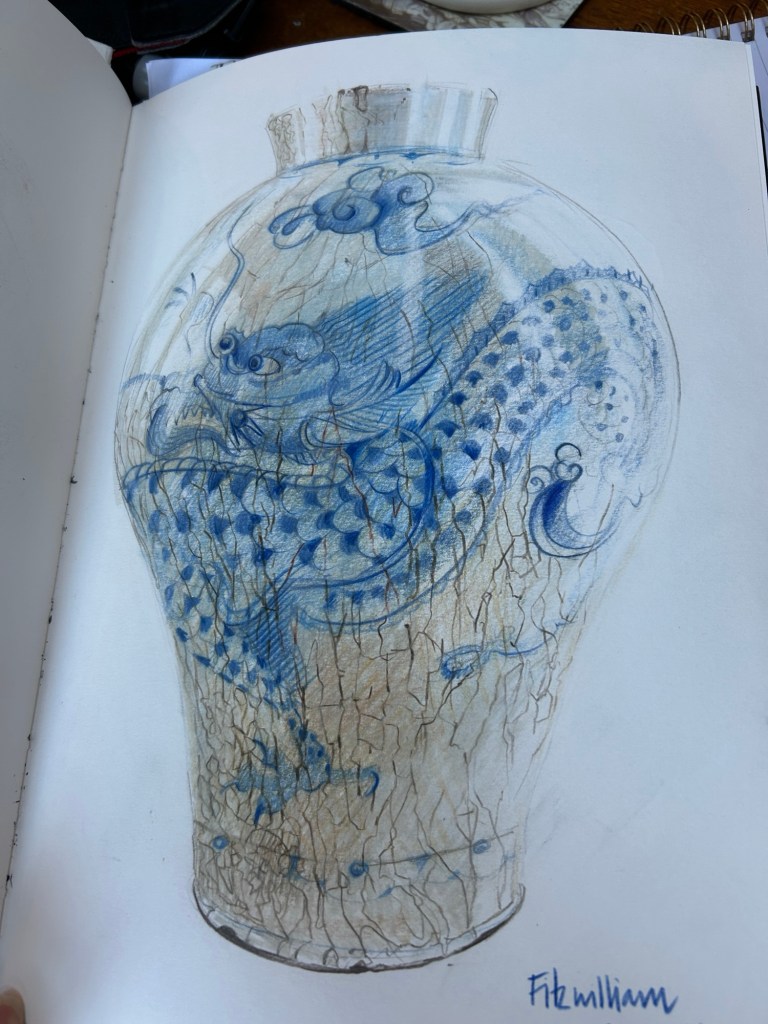
I am enjoying the challenge of rendering tiny crazed lines and cracks found in porcelain and other ceramics. I have several ideas that I am exploring, having visited and sketched at the Fitzwilliam Museum, Cambridge on many occasions. For now, I have been focusing on small areas of crazing etc, but have just received some larger sheets of lino block (60 x 40cm I think) and am excited to work on some sizeable prints over the next few months. These I will share more fully in a future blog entry…

Heirloom Prints

My dear father sadly passed away a few months ago and in the process of grieving for him, looking at his cherished belongings, I felt more connected than ever to my family and their deeply personal legacy.

In finding a treasure trove of boxes, I stumbled upon my maternal Grandma’s handmade lace and embroidery. Some pieces I think may well have been Great Grandmother’s, I’m not sure. Grandma was a very special lady, born at the end of the 19th century. She lost her mother when she was very young and went to live with her older sister before going into service. She met my Grandfather during the First World War and they were soon engaged. Like so many couples at that time, they were hindered by the financial burdens of the period and weren’t able to marry until 1929.

She had lost many dear relatives on the Western Front and I know how important home was to her. She loved nothing more than a line of bright white washing; for her it symbolised the great fortune she enjoyed in bringing up a young family, whilst so many of her friends wouldn’t have been so lucky. She always had a stitching project on the go and these beautiful examples, together with more my dear cousin as since found, form a deep and very fond memory for me. These pieces have been used, cherished and repaired and would have made her home uniquely personal to her. Table runners, lace doilies, dressing table sets and armchair covers were commonplace in many homes of course and Grandma would have been incredibly humble about them. Knitting, crochet, embroidery, lace were threads that wove their way throughout her long life and I loved it when she stayed with us when I was a child. I would come home from school and she would have knitted a complete outfit for my favourite doll. Amazing!

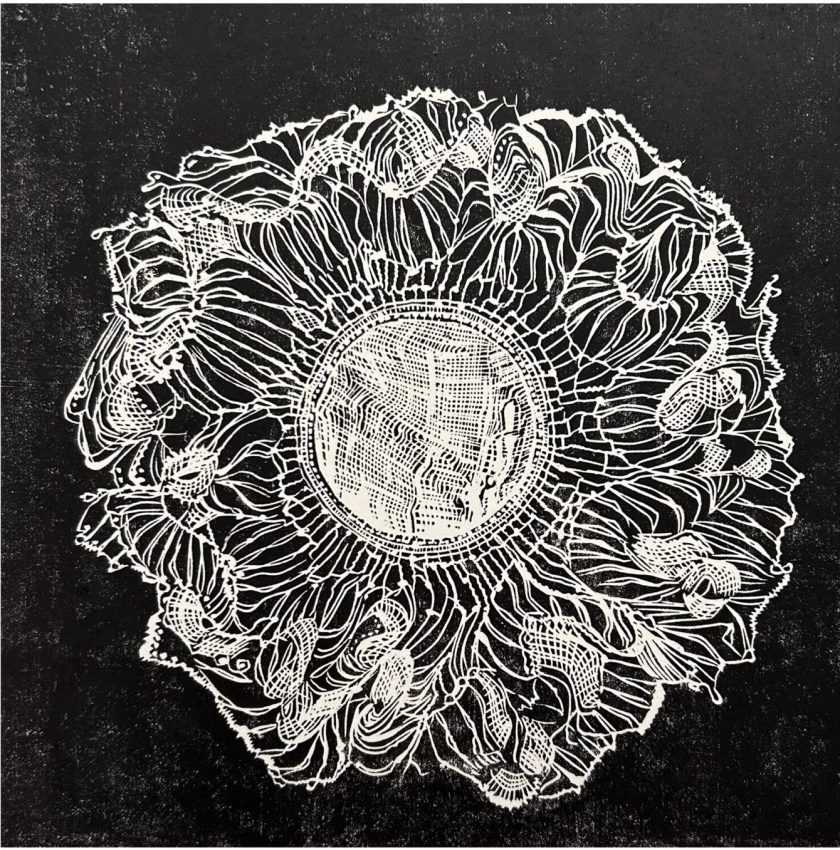
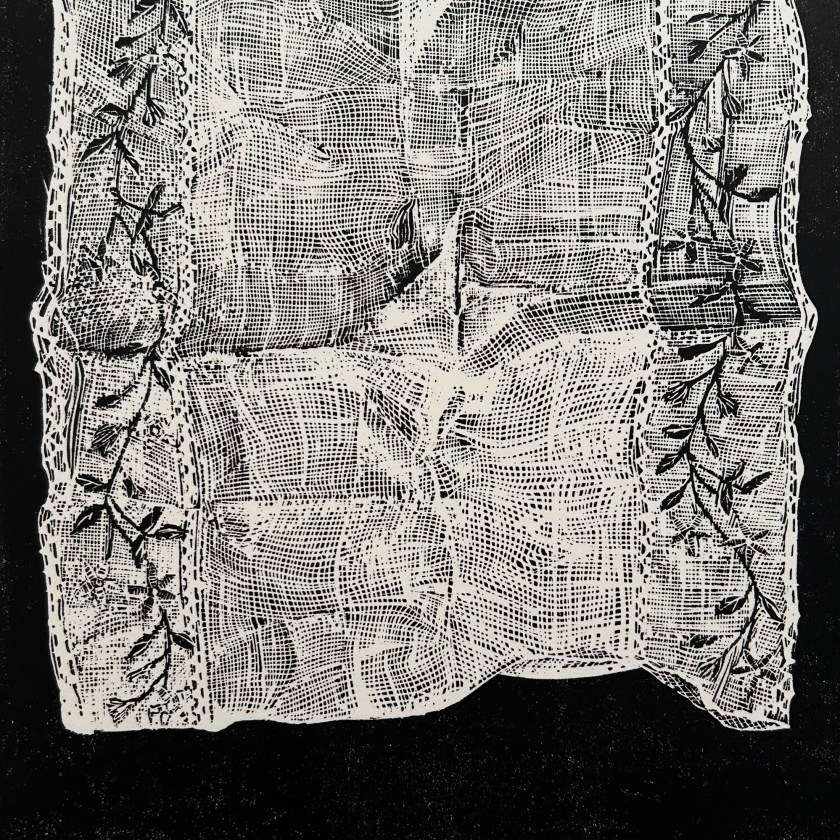
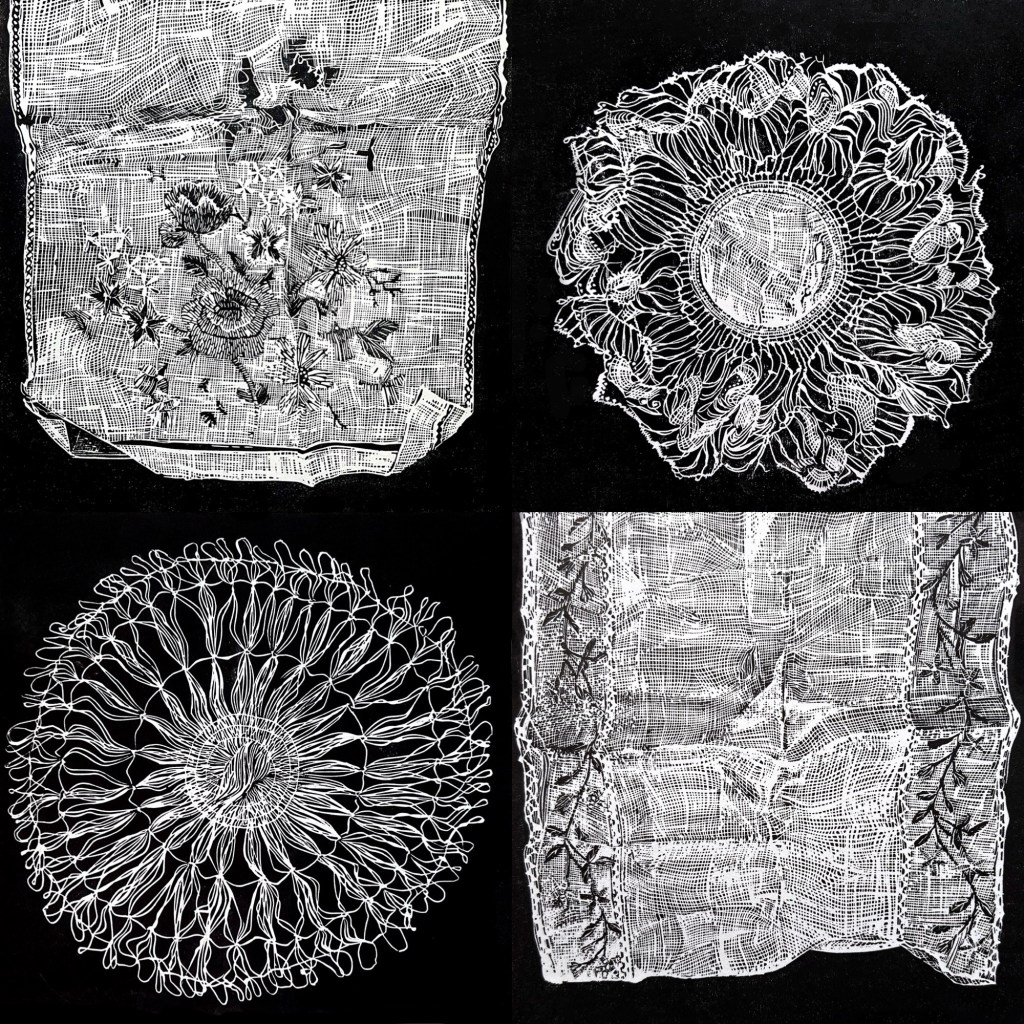
I set about trying to depict the fragility and beauty of this legacy of heirlooms in my printmaking. I love their creases, repairs, breaks and tears; each holding a part of her story. The concentric patterns of loops and knots are perfect for carving, using the thinnest of tools and extreme patience. Each 8 x 8 inch print has taken between 3- 5 days solid carving and I loved every moment. I have several more to explore!